
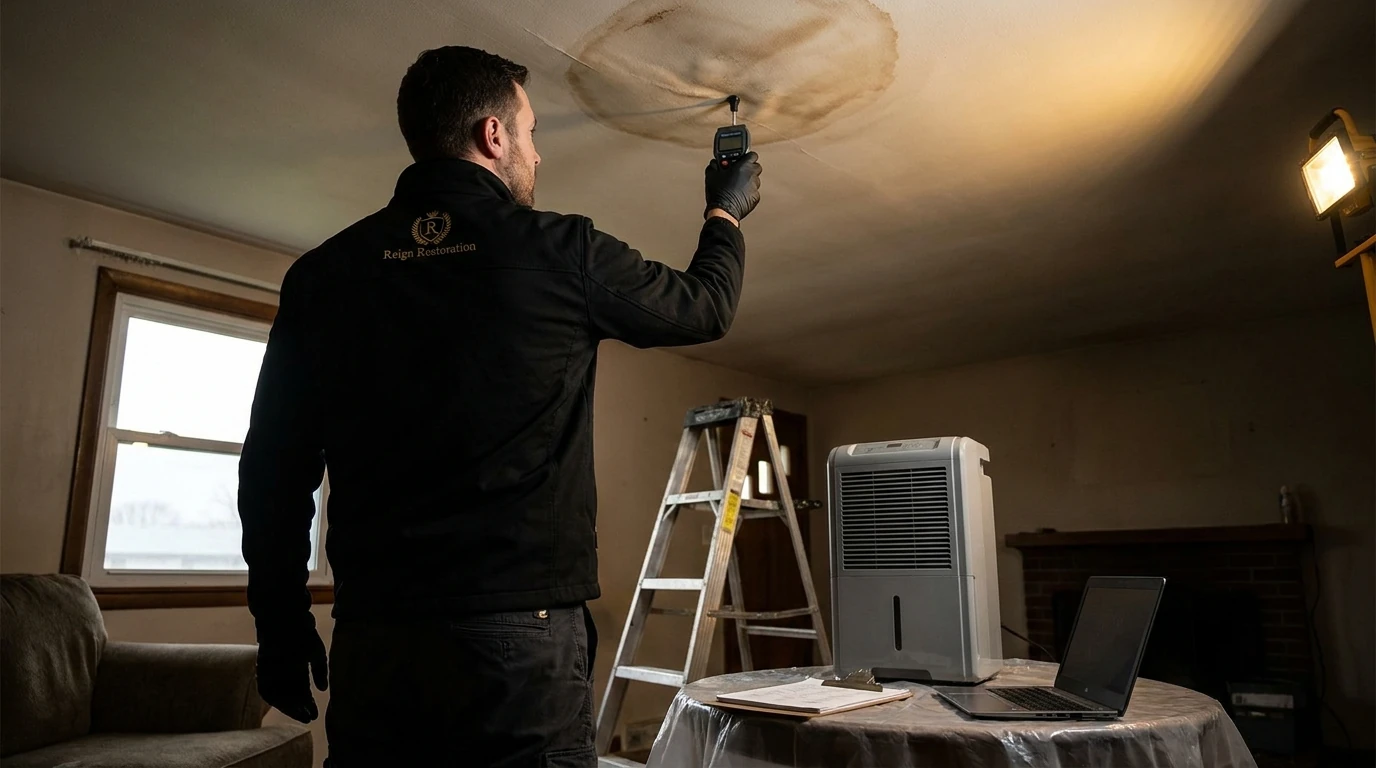
TL;DR: In Royse City and the surrounding North Texas area, repairing a water-damaged ceiling typically costs $300 to $1,500 for a small drywall patch, $1,500 to $4,500 for a full ceiling section with insulation and texture match, and $4,500 to $9,000 or more when the ceiling has sagged or partially collapsed and framing needs attention. The final price depends on how much area is wet, whether insulation has to be replaced, how many days of structural drying the job needs, and whether mold turns up once the ceiling is opened.
If you’re staring at a yellow-brown ring spreading across your living room ceiling, or water is actively dripping from the drywall below your attic AC unit, you need two things fast: a realistic number and a straight answer on whether insurance will pay for it. Ceiling damage in Royse City almost always traces back to one of three sources: an attic air conditioner’s condensate line or drain pan overflowing, an attic-mounted water heater failing, or a hail-damaged roof finally leaking during the next rain. Here’s what a real repair runs and what usually separates a covered claim from an out-of-pocket one.
How Much Does Ceiling Water Damage Repair Cost in Royse City?
Most ceiling water damage repairs in Royse City fall between $300 and $4,500, and the number is driven almost entirely by how much drywall and insulation has to come out and whether the texture needs to be matched. A quick stain from a one-time AC overflow costs far less than a section that’s pulled away from the joists.
| Scenario | Typical Cost Range |
|---|---|
| Small ceiling stain, clean water, no drywall removal (dry in place and seal) | $300 - $800 |
| Drywall patch, 1 to 4 sq ft, texture match, insulation intact | $600 - $1,500 |
| Moderate ceiling section, 10 to 25 sq ft, insulation replaced, popcorn or knockdown texture matched | $1,500 - $4,000 |
| Full room ceiling replacement including structural drying days | $3,000 - $6,500 |
| Sagging or partially collapsed ceiling with joist or truss inspection and framing repair | $4,500 - $9,000+ |
| Mold remediation add-on when growth is found in the cavity | $500 - $3,000, added to the repair cost |
These are typical industry ranges for North Texas, not a quote. Every real job should start with a written scope that spells out drying days, materials, and labor before anyone opens a wall, which is the only way to keep a repair bill and an insurance claim lined up.
What Drives the Cost Up or Down?
Four things move the price more than anything else: the size of the wet area, whether insulation has to be replaced, how closely the texture has to match, and how many days of structural drying the cavity needs.
- Area affected. A 2-foot stain and a 20-foot sagging section are different jobs even though both started as “ceiling water damage.” Drywall is sold and labored by the sheet, so cutting back to the nearest stud or joist often costs less than trying to patch an irregular hole.
- Insulation. Most Royse City attics use blown-in or batt insulation above the ceiling. Once it’s saturated it loses its R-value and has to be bagged out and replaced, which adds a line item many homeowners don’t expect.
- Texture match. Popcorn and knockdown textures, common in homes built before the 2000s across Royse City, Rockwall, and Fate, take real skill to blend seamlessly. A sloppy texture match is the most common complaint after a cheap repair.
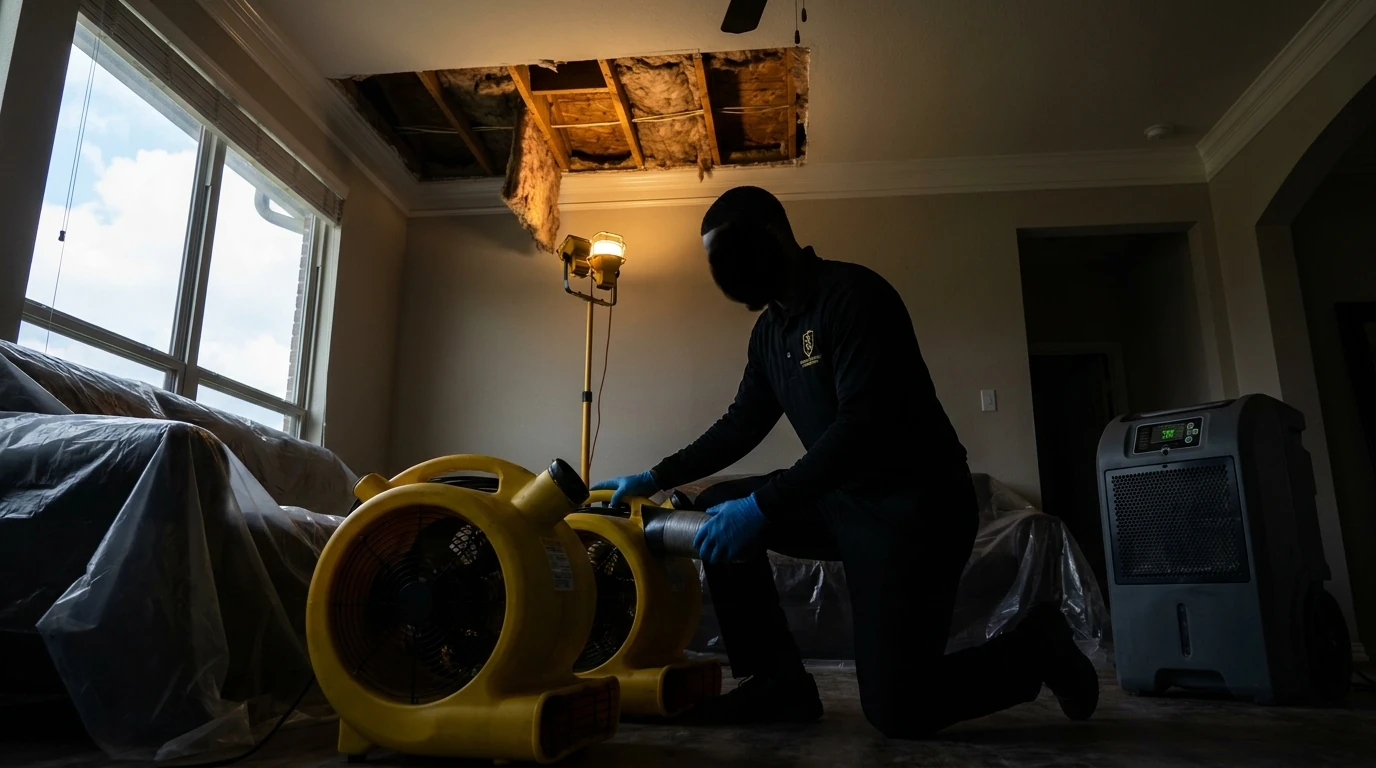
- Drying time. Drywall and insulation above a ceiling cavity dry slower than an open wall because airflow is limited. Drying to the ANSI/IICRC S500 standard usually takes 3 to 5 days with air movers and a dehumidifier running continuously, and every extra day adds equipment rental cost to the job.
- Source and category of water. Clean water from a failed supply line dries differently than water that’s been sitting in an attic for weeks. Gray or contaminated water usually means more material comes out instead of being dried in place.
If the ceiling has already started sagging, read our guide on ceiling water damage and when the ceiling has to come down before you decide what’s salvageable.
Will Insurance Cover Ceiling Water Damage in Royse City?
It depends on whether the leak was sudden and accidental or a gradual problem that built up over time. A water heater that fails overnight in the attic is usually treated as a sudden loss and covered; an AC condensate line that’s been slowly clogging for months is usually treated as a maintenance issue and is often denied.
A supply line or water heater that suddenly bursts drops Category 1, clean water into the ceiling cavity, and most homeowners policies cover sudden, accidental water damage from an internal source like that. An AC drain pan overflow is murkier: if a float switch failed suddenly, it can be covered, but if the line had been draining slowly for weeks before anyone noticed the stain, an adjuster may call that gradual seepage and exclude it. Hail is its own category. Wind and hail damage to the roof itself is typically a covered peril under a standard policy, but if a hail hit went unnoticed and the roof leaked for weeks afterward, the insurer may argue the interior damage reflects delayed maintenance rather than the storm. Getting a roof inspection soon after any hail event protects both the roof claim and the ceiling claim underneath it.
Whatever the source, homeowners have a duty to mitigate further damage once a leak is found: stopping the water and starting to dry promptly protects the claim, and photos plus receipts matter more than memory later. For a fuller walkthrough of what’s typically covered, see our guide on whether homeowners insurance covers water damage, and the Texas Department of Insurance’s page on when water damage and mold are covered is a good neutral reference before you file.
What Happens During a Ceiling Water Damage Repair?
A typical ceiling repair moves through four phases: stop the water, dry the structure, remove only what can’t be saved, and rebuild with matched drywall and texture.
- Source stop and extraction. The leak gets shut off or the roof gets tarped, and any standing water is extracted before drying equipment goes in.
- Moisture mapping and structural drying. A moisture meter documents how deep and how far the water traveled, then air movers and a dehumidifier run for several days while readings are logged to confirm the cavity is actually dry, not just dry to the touch.
- Demo of unsalvageable material. Drywall and insulation that stayed wet too long, or that show signs of mold, come out. Everything else stays and dries in place.
- Rebuild and texture match. New drywall is hung, taped, textured to match the existing ceiling, primed, and painted, then a final moisture check confirms the framing is dry before the job closes out.
For larger jobs, like a full-room ceiling collapse or multiple rooms affected after a roof failure, this moves into our reconstruction scope rather than a standalone drywall patch.
What Should You Do Next?
Get a written drying and repair scope before any work starts, so you know exactly what you’re being charged for and what’s going to your insurer. A vague verbal estimate is how ceiling repairs turn into disputes later.
If a stain is spreading or a section feels soft to the touch, that’s worth a same-day look rather than a wait-and-see approach, since saturated drywall and insulation only get heavier and more likely to fail. Call Reign Restoration at (214) 304-0621 to schedule a moisture assessment; our crews are IICRC Certified Firm and available 24/7 across Royse City, Rockwall, Fate, and the surrounding area.
A ceiling repair is rarely just drywall. It’s drying, insulation, texture, and sometimes a mold check, all done in the right order so the repair holds and the claim, if there is one, gets documented correctly the first time.
About Reign Restoration
This guide was prepared by Jerrott Gray and the team at Reign Restoration, an IICRC Certified Firm based in Royse City, TX (license MRC2276, searchable through the Texas Department of Licensing and Regulation’s mold program). Reign’s crews handle water damage restoration, ceiling and drywall repair, reconstruction, mold remediation, and storm damage work across Royse City, Rockwall, Fate, Rowlett, and the surrounding North Texas communities, available 24/7.