
TL;DR: A hail damage roof inspection checks for bruised or cracked shingles, granule loss in the gutters, and dents on soft metal like vents, flashing, and gutter edges. Royse City and Rockwall County sit inside a stretch of North Texas that sees hail most springs, so a quick inspection after any hail event matters both for the roof’s lifespan and for the insurance claim window. Most Texas homeowners policies cover wind and hail damage, but documentation taken soon after the storm is what makes or breaks the claim.
If a storm just rolled through Rockwall County and you’re standing in your driveway looking up at your roof wondering whether those little dents mean anything, you’re not alone. Hail that’s big enough to dent a mailbox or strip leaves off a tree is usually big enough to damage asphalt shingles, even when the roof looks fine from the ground. The only way to know for sure is a close, methodical inspection, and the timing of that inspection matters almost as much as the inspection itself.
What Does a Hail Damage Roof Inspection Actually Check For?
A hail damage roof inspection looks for bruised shingles, granule loss, and dents on any exposed soft metal, because those three signs together confirm impact even when the roof isn’t visibly leaking yet.
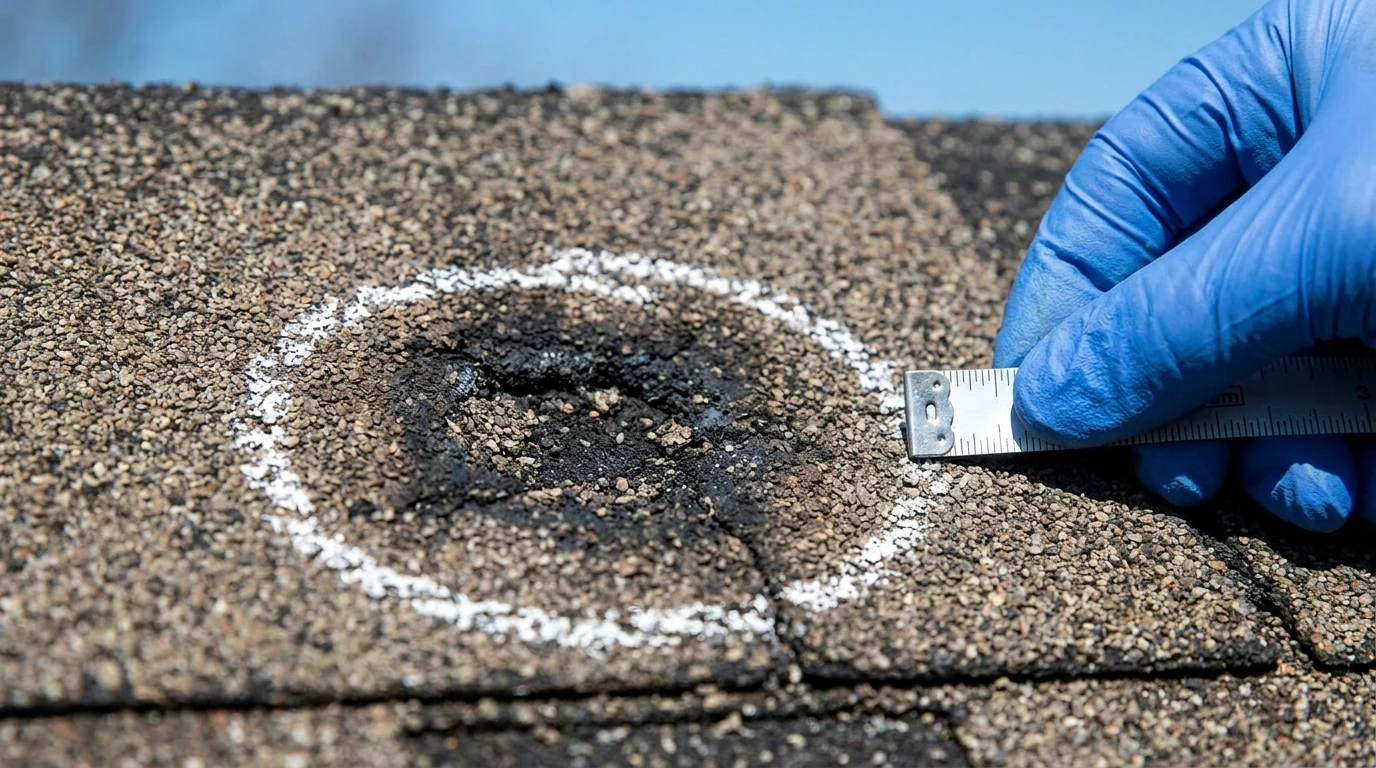
Shingle “bruises” are soft spots where the hail impact fractured the mat beneath the granules without tearing all the way through. Pressed gently, a bruise gives slightly, like a soft spot on an apple. Granule loss shows up as bald patches on the shingle and as a buildup of loose granules sitting in the gutters or at the base of downspouts after a storm; shingles shed granules naturally over time, but a sudden pile right after a hailstorm is a flag.
Soft metal tells the story fastest. Roof vents, flashing, gutter aprons, and window screens dent far more easily than shingles, so an inspector checks those first as a proxy for impact size and force across the whole roof. Round, randomly scattered dents (not a dent from a dropped tool or a branch) with no clear pattern usually mean hail.
How Soon Should You Schedule an Inspection After a Hailstorm?
Schedule a roof inspection within days of any hailstorm, not weeks, because most homeowners policies require damage to be reported within a defined window and roof problems compound quickly in North Texas heat.
A bruised shingle that isn’t addressed doesn’t just sit there. UV exposure and the next heavy rain can turn a hairline fracture into an active leak, and by the time water shows up on a ceiling, the shingle has likely been compromised for weeks or months. Insurance adjusters also tend to be more responsive right after a widely reported regional storm, when they already know hail hit the area, versus months later when you’re asking them to take your word for it.
Rockwall County and the surrounding DFW area sit in what meteorologists sometimes call hail alley, with the most active stretch typically running from late winter through early summer. Even outside that window, any report of pea-sized hail or larger in Royse City, Fate, or Rockwall is worth a prompt inspection, especially if you notice dented gutters or siding from the street.
Does Insurance Cover Hail Damage to a Roof?
Most Texas homeowners insurance policies cover hail damage to a roof under the wind and hail peril, but coverage usually comes with a separate wind/hail deductible that’s often a percentage of your home’s insured value rather than a flat dollar figure.
That percentage-based deductible catches a lot of homeowners off guard. A policy with a 1% wind/hail deductible on a $350,000 insured home means the first $3,500 of damage is out of pocket before the policy starts paying. Some older policies or certain coastal and high-risk zones carry higher percentages, so it’s worth pulling your actual declarations page rather than assuming.
What the adjuster approves depends heavily on documentation: dated photos of the damage, a written inspection report describing specific impact sites, and, ideally, that report filed close to the date of the storm. The Texas Department of Insurance publishes guidance on filing storm damage claims, including how to request a copy of your policy and what to do if a claim is underpaid or denied. We can’t guarantee what any individual claim will be approved for, since every policy and every roof is different, but a written scope from an inspection performed close to the storm date is the single best thing you can hand an adjuster.
Should You Check the Attic Too?
Yes, because hail damage that breaches the shingle mat or flashing can let water into the attic long before a stain appears on an interior ceiling.
A full inspection isn’t complete at the shingles. Water that gets past a cracked shingle or a dented flashing seam travels along the roof deck and insulation before it ever shows up as a visible stain inside the house. Signs to look for in the attic include dark streaking on the underside of the decking, compressed or discolored insulation near a roof penetration, and a musty smell, even faint, after a storm. Catching that moisture early is what separates a straightforward roofing repair from a job that also needs water damage restoration and mold prevention weeks later.
The IBHS publishes research on impact-resistant roofing materials and storm-resilient construction, which is useful reading if your roof is due for a full replacement rather than a repair, since some insurers offer premium credits for Class 4 impact-rated shingles.
What Happens During a Professional Hail Damage Inspection?
A professional inspection typically covers a visual ground survey, a closer walk of the roof surface itself, a check of all penetrations and metal components, and a written report with photos tied to each finding.
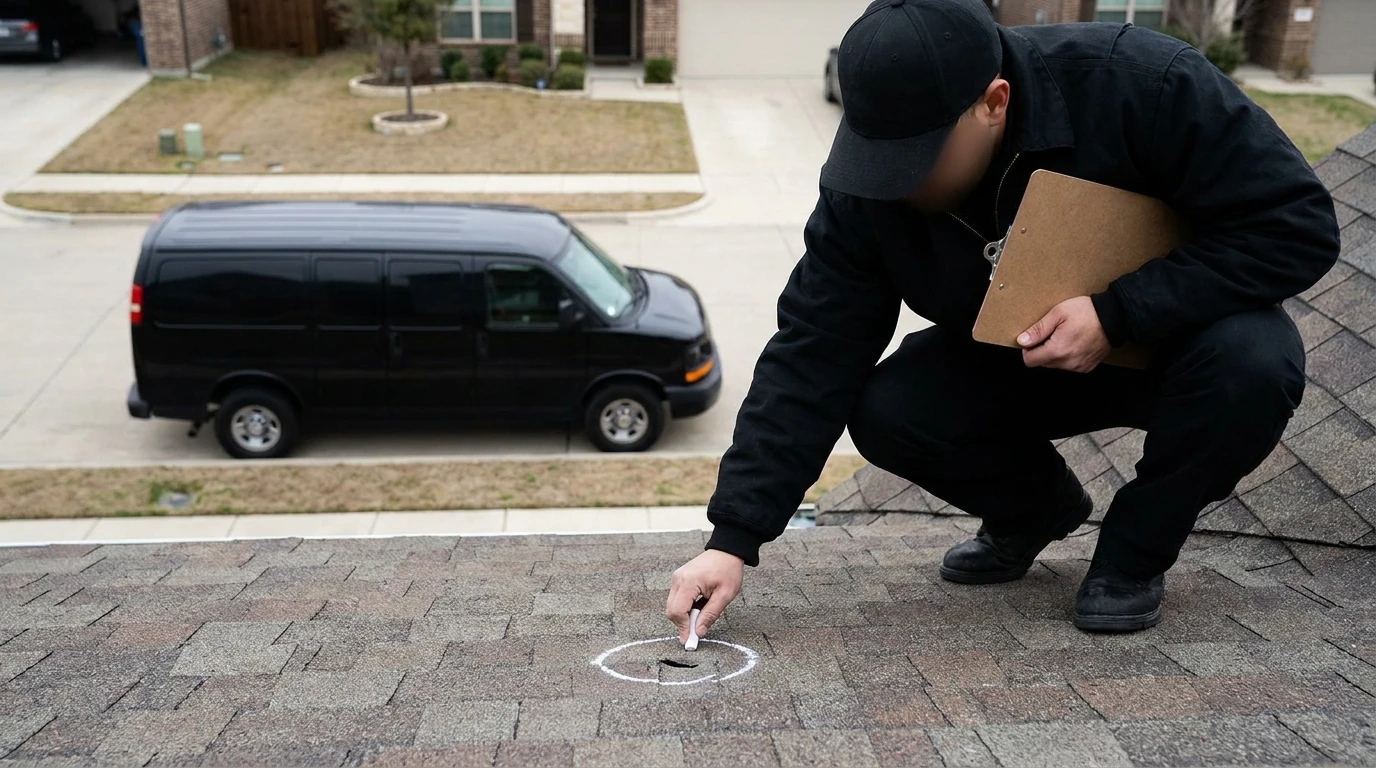
The inspector walks the roof in a grid pattern rather than a quick glance, marking suspected hits with chalk so they can be photographed and counted. Gutters, downspouts, AC condenser fins, window screens, and fence tops get checked too, since consistent dents across multiple soft materials build a stronger claim than shingle damage alone. The final report should give you something concrete: a count of impacts per test square, photos of representative damage, and a plain statement of whether the roof needs repair, partial replacement, or full replacement.
If you’ve had hail in Royse City or anywhere in Rockwall County recently and aren’t sure what you’re looking at, request a roof inspection from Reign Restoration before you call your insurer, so you’re walking into that conversation with documentation instead of a guess. For storm damage beyond the roof, our storm damage restoration crews handle the interior side of the same claim, from water intrusion to damaged ceilings. Our earlier post on who to call for storm damage in Royse City covers the broader response steps if the same storm also knocked down fencing, siding, or trees.
A roof that looks fine from the driveway can still have a dozen bruised shingles an inspector will find in twenty minutes. Getting that inspection done soon after a storm, with photos and a written report in hand, is what protects both the roof’s remaining lifespan and your ability to file the claim with confidence.
About Reign Restoration
Reign Restoration is an IICRC Certified Firm serving Royse City, Rockwall, and the surrounding North Texas communities, holding IICRC credentials in water, fire and smoke, and mold restoration (license MRC2276). This post was written with input from Jerrott Gray and the Reign Restoration team, who coordinate roofing, storm damage restoration, and the interior water and structural repairs that often follow hail and wind events in Rockwall County.
Need help now? Call Reign Restoration at (214) 304-0621.