
TL;DR: In Royse City, most mold remediation jobs cost between $600 and $6,500, depending on how many square feet are affected and where the mold is growing. A single bathroom wall or under-sink cabinet usually runs under $1,500. An attic or whole-house job that involves removing drywall and insulation runs $2,000 to $15,000 or more. Texas law requires a separate, independently licensed mold assessor for any job covering more than 25 contiguous square feet, and that inspection is its own line item on the invoice, not part of the remediation price.
If you just found a soft, dark patch on a bathroom ceiling, or a home inspector flagged mold in the attic during a sale in Royse City, the question that actually matters is what the fix costs. North Texas humidity, slab foundations, and attic air handlers sitting over finished living space all push moisture into places it shouldn’t be, and once drywall paper or attic decking stays damp long enough, mold follows. The price depends far more on how much material has to come out than on what color the mold is.
How Much Does Mold Remediation Cost in Royse City?
Mold remediation in Royse City typically costs $600 to $6,500 for most residential jobs. Small, isolated spots under a sink or around a shower surround land at the low end. Attic-wide or whole-house jobs after a slow roof leak or a bigger water loss land at the high end, sometimes well past $10,000 once framing and insulation have to be replaced.
The number is driven almost entirely by two things: how many square feet are affected, and whether the mold sits on a surface that can be cleaned in place (tile, concrete, sealed wood) or one that has to be cut out and replaced (drywall, insulation, carpet pad, OSB attic decking). A 3-square-foot patch behind a washing machine and a 300-square-foot attic deck are both “mold remediation,” but they are not close to the same invoice.
What Does Mold Remediation Cost by Job Size and Location in the House?
Here’s how that typically breaks down by scope, based on the range of jobs this kind of work actually covers in North Texas:
| Scenario | Typical Cost Range |
|---|---|
| Small spot, under 10 sq ft (under a sink, around a toilet base) | $300 - $750 |
| Bathroom wall or shower surround (10 to 40 sq ft) | $600 - $1,800 |
| Single wall or room section, drywall and insulation removed | $1,200 - $3,500 |
| Attic mold remediation (rafters, decking, insulation) | $1,800 - $6,500 |
| HVAC/ductwork contamination | $1,500 - $5,000 |
| Whole-house remediation across multiple rooms | $6,000 - $18,000+ |
These are typical industry ranges, not a quote. Every job gets a written scope before work starts, because the real driver (how much material comes out, how many rooms, whether containment has to isolate an HVAC return) only shows up once someone has actually opened the wall or climbed into the attic.
What Drives the Price Up or Down?
The biggest single factor is contiguous square footage. Under Texas rules, any remediation project covering more than 25 contiguous square feet of mold requires an independent, state-licensed mold assessor, separate from the remediation contractor, to write the protocol beforehand and sign off on clearance testing afterward. That inspection typically adds $300 to $800 to the project and is a required line item, not an optional upsell. You can confirm a company’s or assessor’s license status through the Texas Department of Licensing and Regulation’s license search.
Past that threshold, cost moves with:
- What caused it. Mold from a one-time Category 1 leak (a supply line) usually means less porous material has to be removed than mold from a long-running Category 2 or 3 source, where more drywall and insulation typically can’t be saved.
- Materials affected. Tile, concrete, and sealed wood can often be HEPA-vacuumed and treated in place. Drywall, carpet pad, and attic insulation almost always get removed and replaced.
- Accessibility. Attic trusses and crawlspaces take longer to work in than an open bathroom, which shows up in labor hours.
- Containment and air scrubbing time. Larger jobs need negative-pressure containment and HEPA air scrubbers running longer to meet clearance.
- Rebuild. Removed drywall, flooring, and trim get billed separately as reconstruction once the space clears testing. That’s a different scope from the remediation itself.
If you’ve already noticed warning signs like a musty smell that won’t go away or discoloration creeping along a baseboard, our guide to 7 signs you have hidden mold walks through what’s worth a closer look before it becomes a bigger job.
Is Black Mold Removal More Expensive Than Regular Mold?
The color of the mold itself doesn’t change the price. What changes the price is what caused it and how long it sat. Stachybotrys (often called black mold) tends to show up after longer-term moisture exposure, like a slow roof leak or a chronic plumbing drip, and that kind of prolonged wetting usually means more material has degraded and needs to be removed rather than cleaned. So a black mold job often costs more, but it’s because of the extent of the damage underneath, not the species. For a closer look at telling the two apart before you call anyone, see black mold vs regular mold.
Does Homeowners Insurance Cover Mold Remediation Cost?
Most homeowners policies only cover mold remediation when the mold grew out of a sudden, covered water loss, like a burst pipe, not from long-term leaks, humidity, or poor maintenance. Even then, many Texas policies cap mold coverage at a set dollar amount regardless of the underlying claim.
That means the honest answer to “who pays for mold remediation” is usually some combination of a capped insurance payout and the homeowner. The Texas Department of Insurance has a plain breakdown of when water damage and mold are covered by insurance worth reading before you file. Documentation helps either way: photos of the affected area, moisture readings, and a written scope of work from the remediation contractor are what an adjuster needs to evaluate the claim, and we provide that documentation on every job we price.
What Happens During a Mold Remediation Job?
A proper mold remediation job in Texas follows a set sequence, and knowing the steps makes the invoice make more sense:
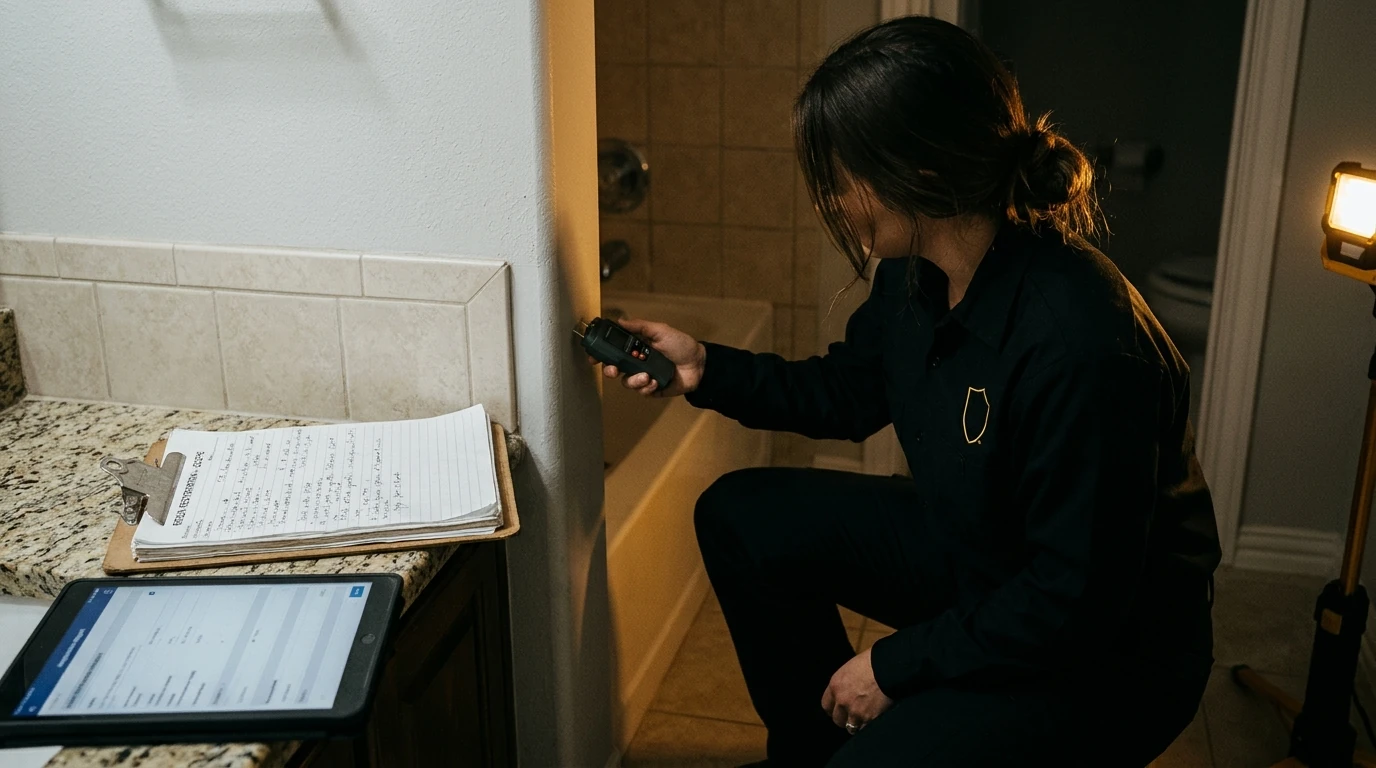
- Assessment. For jobs over 25 contiguous square feet, a licensed mold assessor inspects the area and writes a remediation protocol before any work begins.
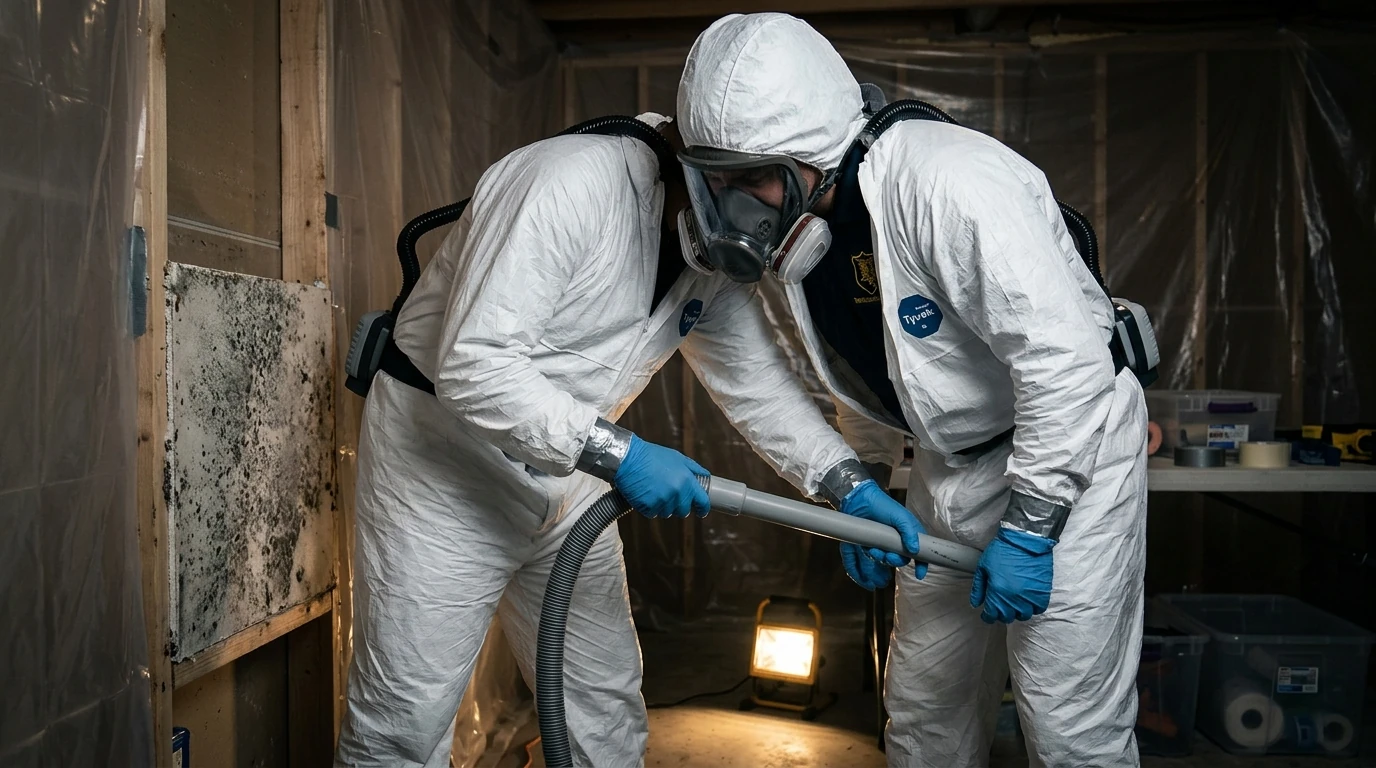
- Containment. Poly sheeting seals off the work area and creates negative air pressure so spores don’t spread to the rest of the house.
- HEPA air scrubbing. Air scrubbers run throughout the job to capture airborne spores.
- Material removal. Non-salvageable drywall, insulation, and flooring come out and go into sealed bags for disposal.
- Cleaning and treatment. Remaining surfaces get HEPA-vacuumed and treated with an EPA-registered antimicrobial, following the approach outlined in the EPA’s mold cleanup guidance.
- Clearance testing. The same independent assessor returns to confirm the space passes before containment comes down.
- Rebuild. Drywall, insulation, and trim go back in. That phase is billed and scheduled separately as reconstruction.
If the mold you’re dealing with traces back to an active leak rather than a past one, it’s worth getting that water source stopped and assessed first. Our water damage restoration team and mold crew coordinate on jobs like that so the moisture problem and the mold problem get solved in the same visit instead of two separate ones.
If you’re not sure yet whether what you’re looking at needs a full remediation protocol or just a cleaning, a mold inspection and testing visit is the right first step. It gives you a real square-footage number and a written scope before anyone commits to a price.
About Reign Restoration
Reign Restoration is an IICRC Certified Firm based in Royse City, TX, holding license MRC2276, with technicians certified in IICRC’s Applied Microbial Remediation (AMRT) standard. The company handles mold remediation, mold inspection and testing, water damage restoration, and reconstruction across Royse City, Rockwall, Fate, Rowlett, and the surrounding North Texas area, with 24/7 emergency service and a 5.0 Google rating across 26 reviews. This guide was prepared with input from Jerrott Gray and Reign Restoration’s mold remediation team.
Need help now? Call Reign Restoration at (214) 304-0621.