
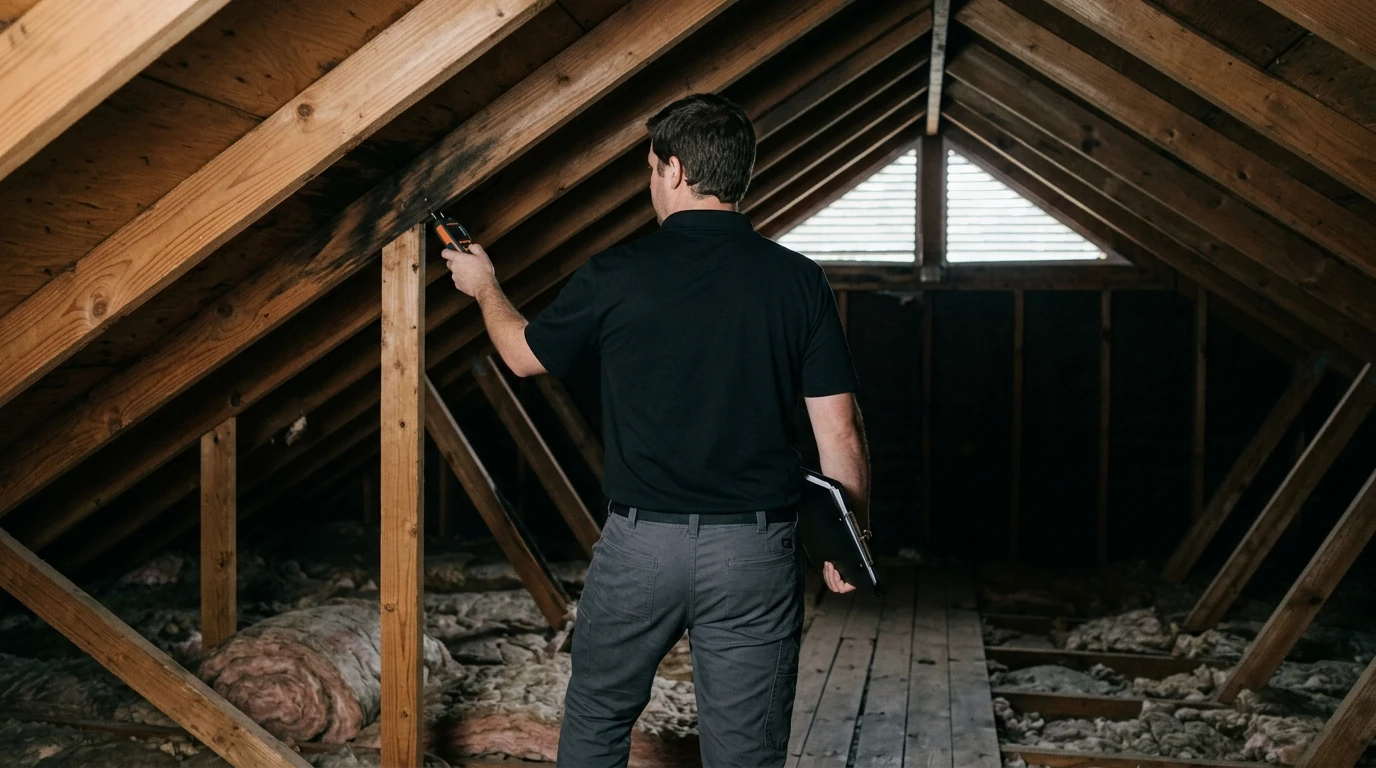
TL;DR: Mold remediation in Dallas typically costs $500 to $1,500 for a small, localized area and $8,000 to $20,000 or more for a whole-house job with extensive drywall and insulation removal. Attic, crawl space, and HVAC remediation usually fall in the $1,500 to $6,500 range. Texas law requires a separate, independently licensed mold assessment for larger jobs, which is billed apart from the remediation itself, and reconstruction to put the home back together is typically a third, separate line item.
If you just got a mold inspection report back for a house in Lakewood or Oak Cliff and you’re staring at a number with no context for whether it’s reasonable, you’re not alone. Dallas has a lot of 1920s and 30s pier-and-beam housing with original cast-iron drains, plus newer slab homes where a single AC condensation leak can seed mold in a wall cavity for months before anyone notices. The price swings hard depending on how big the job is and where in the house the mold has taken hold, so a flat number from a phone quote rarely tells you much. Here’s what the actual cost drivers look like.
How Much Does Mold Remediation Cost by Job Size?
Job size, meaning how much contaminated material has to be removed and treated, is the single biggest driver of mold remediation cost. A small localized spot runs a few hundred dollars; a whole-house job with structural removal can run into the tens of thousands.
| Job size | Typical cost range |
|---|---|
| Small, localized area (under 10 sq ft, one closet or bathroom corner) | $500 - $1,500 |
| One to two rooms, surface mold on drywall, no material removal | $1,500 - $3,500 |
| One to two rooms with drywall and insulation removal | $3,500 - $7,500 |
| Attic remediation (decking, rafters, insulation) | $2,000 - $6,000 |
| Crawl space remediation | $2,500 - $6,500 |
| HVAC/ductwork mold remediation | $1,500 - $4,000 |
| Whole-house remediation, multiple rooms with extensive growth | $8,000 - $20,000+ |
These are typical industry ranges for North Texas, not a quote. Two homes with the “same” square footage of visible mold can land at very different numbers depending on what’s behind the drywall once it comes off.
How Much Does Mold Remediation Cost by Location in the House?
Where the mold is matters almost as much as how much there is, because access, containment, and the materials involved change the labor. An attic job and a basement job of the same size rarely cost the same.
Attics run warm, humid, and hard to access, which is exactly why Dallas roof leaks and poor ventilation show up here first. Expect $2,000 to $6,000 depending on whether the decking and rafters need treatment or full replacement.
Crawl spaces carry their own premium: workers operate in a tight, low space, often after flash flooding from White Rock or Five Mile Creek has left standing moisture under pier-and-beam homes in East Dallas. Typical range is $2,500 to $6,500.
HVAC systems spread spores through the whole house if mold gets into the ductwork or the air handler’s drip pan, so remediation here often includes duct cleaning alongside the coil and cabinet work, landing around $1,500 to $4,000.
Basements and below-grade spaces are less common in Dallas proper than in older neighborhoods with a true foundation, but where they exist, hydrostatic moisture through the slab or foundation wall is the usual culprit, and costs track closer to the one-to-two-room range unless the growth has spread into framing.
Who Pays for Mold Remediation?
The homeowner usually pays out of pocket for mold remediation unless the mold resulted from a sudden, accidental, covered water loss, like a burst pipe, in which case the homeowners insurance policy may cover part of it, often with a mold-specific coverage cap.
Most standard homeowners policies exclude mold caused by gradual leaks, long-term humidity, or deferred maintenance, since insurers treat those as preventable. Texas Department of Insurance guidance spells out that coverage generally depends on whether the water source itself was a covered, sudden event. Even when it is covered, many Texas policies cap mold remediation payouts at a set dollar amount, commonly $1,000 to $10,000, regardless of the full repair cost.
That’s why documenting the water source fast matters. If a supply line failure caused the mold, photograph it, shut off the water, and get a moisture reading before the drywall comes out, that record is what supports a claim. If the mold stems from a slow roof leak nobody caught, plan on self-paying and budgeting from the ranges above.
What Else Affects the Final Price?
Beyond size and location, a few specifics move the number up or down on any given job.
Mold category and extent. The EPA notes mold can begin growing within 24 to 48 hours on a wet surface, so a leak caught early means surface cleaning; one that sat for weeks usually means removing porous material like drywall and insulation that can’t be fully cleaned.
The Texas mold assessment requirement. For remediation jobs covering roughly 25 contiguous square feet or more, Texas requires a separate, independently licensed Mold Assessment Consultant, a different credential than the remediation contractor, to write the remediation protocol beforehand and perform clearance testing afterward. This is a real conflict-of-interest rule under Texas Department of Licensing and Regulation mold program rules, and it’s billed as its own line item, typically $300 to $800 depending on the size of the inspection and number of clearance samples.
Reconstruction is a separate cost. Remediation removes the mold and the materials it’s growing on. Putting drywall, insulation, trim, and paint back is reconstruction, usually quoted and billed separately once the remediation contractor’s clearance test comes back clean. For posts covering that side of a job, see our guide on water damage restoration costs in TX, since the rebuild math works similarly.
What Happens During a Mold Remediation Job?
A code-compliant mold remediation job in Texas follows a set sequence, starting with an independent assessment and ending with clearance testing, not just cleanup.
- Licensed assessment and written protocol. On jobs over the contiguous-area threshold, a licensed assessor inspects, documents the extent, and writes the remediation protocol the contractor must follow.
- Containment setup. Poly sheeting seals off the work area from the rest of the home to stop spores from spreading during the work.
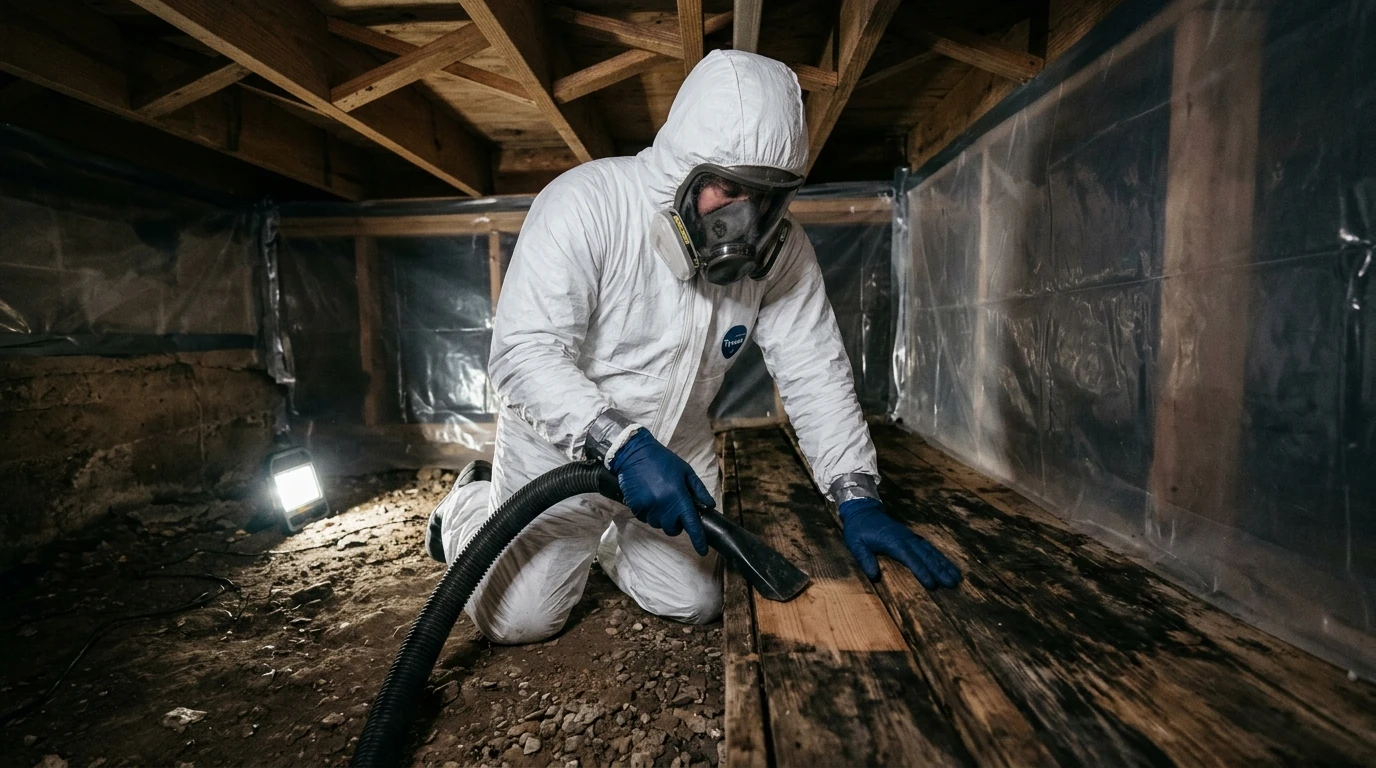
- Remediation per the protocol. HEPA vacuuming, antimicrobial treatment, and removal of any porous material that can’t be cleaned, following the ANSI/IICRC S520 mold remediation standard.
- Drying and air scrubbing. HEPA air scrubbers run through and after the work to capture airborne spores disturbed during removal.
- Clearance testing. The same independent assessor returns, tests the air and surfaces, and signs off that the space passes before anyone closes the walls back up.
- Reconstruction. A separate phase, often a separate quote, to rebuild drywall, insulation, and finishes.
If you’re seeing active growth in Dallas or Lakewood and want a straight number before committing to anything, request a written scope that separates assessment, remediation, and reconstruction into distinct lines, so you can see exactly what you’re paying for at each step.
Reign Restoration’s crews are IICRC AMRT-certified and work from a documented protocol on every job, coordinating the assessment, remediation, and reconstruction phases so nothing falls through the cracks between contractors. Schedule a mold assessment to get a written scope specific to your property before any work starts.
About Reign Restoration
Reign Restoration is an IICRC Certified Firm (license MRC2276) serving Royse City, Dallas, and the surrounding North Texas region. Their technicians hold IICRC AMRT mold remediation certification alongside WRT water and FSRT fire and smoke credentials, and the company operates on a 24/7 basis for emergency calls. Reign handles water damage, mold remediation, fire and smoke restoration, storm damage, and reconstruction across Dallas, Rockwall, Richardson, Plano, and the broader Metroplex.
Need help now? Call Reign Restoration at (214) 304-0621.