
TL;DR: In Texas, mold remediation typically costs $500 to $1,500 for a small isolated spot, $1,500 to $6,500 for a single contaminated room, and $6,000 to $15,000 or more for a whole-house job tied to a major water loss. The biggest cost drivers are square footage, how far the mold has spread into wall cavities or HVAC ductwork, and whether materials need to be removed or can be dried and treated in place.
If you just pulled back a baseboard in a Royse City home and found black or green staining behind it, or a home inspector flagged visible growth during a sale, the number that matters most is what the actual remediation will run, not the general advice. The range below reflects typical Texas Department of Licensing and Regulation (TDLR) mold assessor and remediator pricing patterns for jobs of similar scope.
How Much Does Mold Remediation Cost in Texas?
Most Texas homeowners pay between $500 and $6,500 for mold remediation, with whole-house jobs after a major leak or flood running $6,000 to $15,000 or more. The exact number depends on square footage, how contaminated the materials are, and whether containment and negative air pressure are required.
| Scenario | Typical Cost Range |
|---|---|
| Small bathroom or closet, isolated surface mold | $500 - $1,500 |
| Single room, moderate growth behind drywall | $1,500 - $3,500 |
| Whole-room remediation with HVAC involvement | $3,500 - $6,500 |
| Crawl space or attic mold | $2,000 - $6,000 |
| Whole-house remediation after a major water loss | $6,000 - $15,000+ |
| Mold testing or post-remediation clearance only | $300 - $900 |
These are typical industry ranges, not a quote. Every mold job is different, and a licensed remediator should give you a written scope of work before anything starts.
What Drives the Cost of Mold Remediation Up or Down?
The price moves based on five factors: how much square footage is affected, how deep the mold has gotten into porous materials, whether HVAC ductwork is contaminated, how long the moisture source went unaddressed, and whether the crew needs full containment with negative air machines.
A spot of surface mold on a bathroom ceiling tile, caught early, is a low-cost fix: clean the surface, treat it, fix the ventilation issue causing condensation. That is very different from mold that has had weeks to spread behind drywall after a slow roof leak, where the IICRC’s S520 mold remediation standard calls for removing and replacing the contaminated drywall and insulation rather than trying to clean it in place.
Square footage matters, but so does what’s underneath. A 10 by 10 room with mold confined to one wall costs far less than the same room with growth that has traveled into subfloor or crawl space framing. Houston Black clay soils common across North Texas also mean homes with slab foundations sometimes trap moisture against baseboards long enough for mold to establish before anyone notices a smell. Mold can begin growing on wet material within 24 to 48 hours, according to the EPA, which is why the gap between the original leak and the remediation call matters as much as the square footage itself.
Finally, containment adds cost but it’s not optional on anything beyond a small isolated spot. Licensed remediators in Texas work under TDLR’s mold assessor and remediator rules, which require documented containment and clearance testing on larger jobs, not just a scrub and a fan.
Does Homeowners Insurance Cover Mold Remediation in Texas?
Most standard Texas homeowners policies cover mold remediation only when the mold resulted from a sudden, covered water loss, like a burst pipe, not from a gradual leak or long-term moisture problem. Many policies also cap mold coverage at a set dollar amount regardless of the actual remediation cost.
If a supply line burst overnight and mold shows up within the claim window, that’s typically treated as part of the water damage claim. If the mold traces back to a slow roof leak that went unaddressed for months, or condensation from a chronically humid crawl space, insurers routinely deny it as a maintenance issue. The Texas Department of Insurance spells out this distinction directly: sudden and accidental is the test, not how bad the mold got.
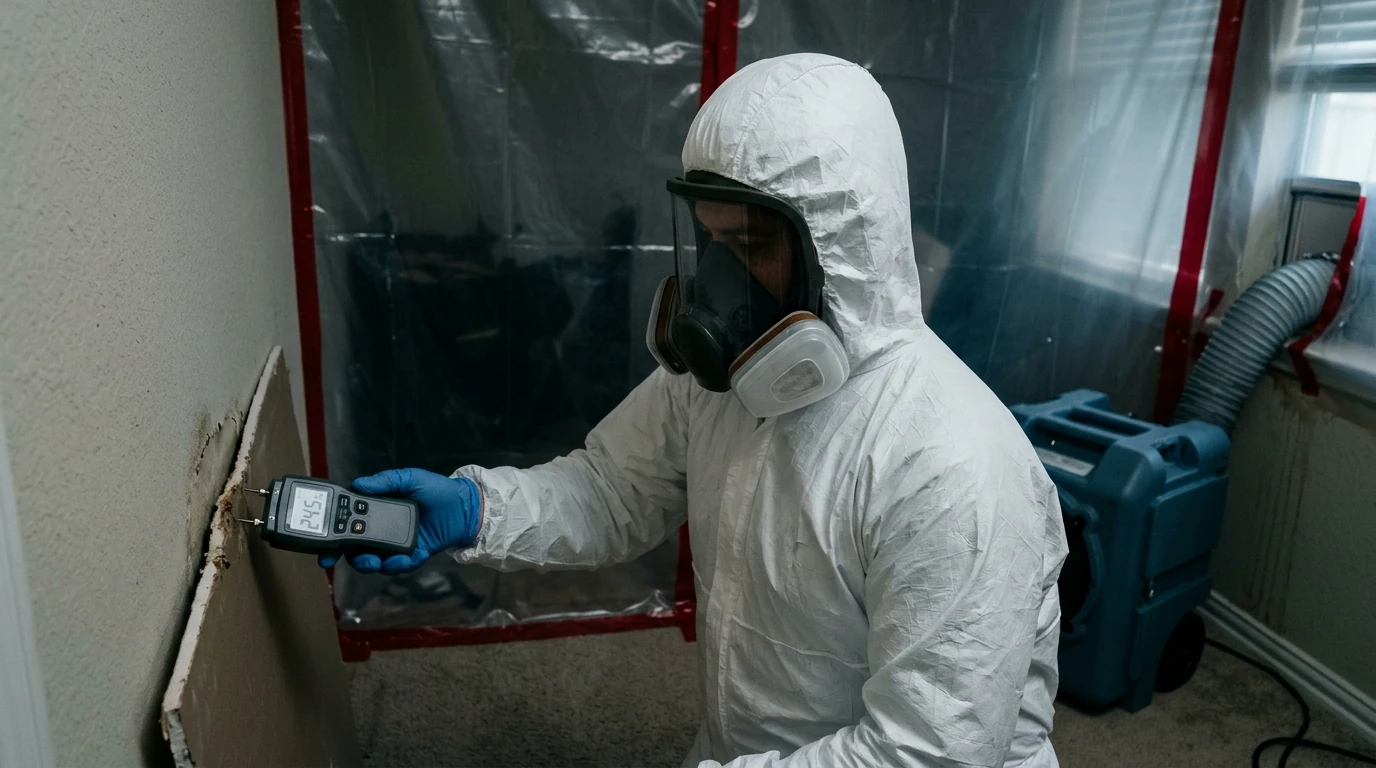
Documentation protects the claim either way. Photos of the original source, the date it was discovered, and a written moisture reading from day one all matter when an adjuster is deciding whether this was sudden or gradual. If you’re not sure whether what you’re looking at is mold worth a professional opinion, our guide on how to test for mold walks through DIY kits versus a real inspection, and black mold vs. regular mold covers how to tell what you’re actually dealing with before you call anyone.
What Happens During Mold Remediation?
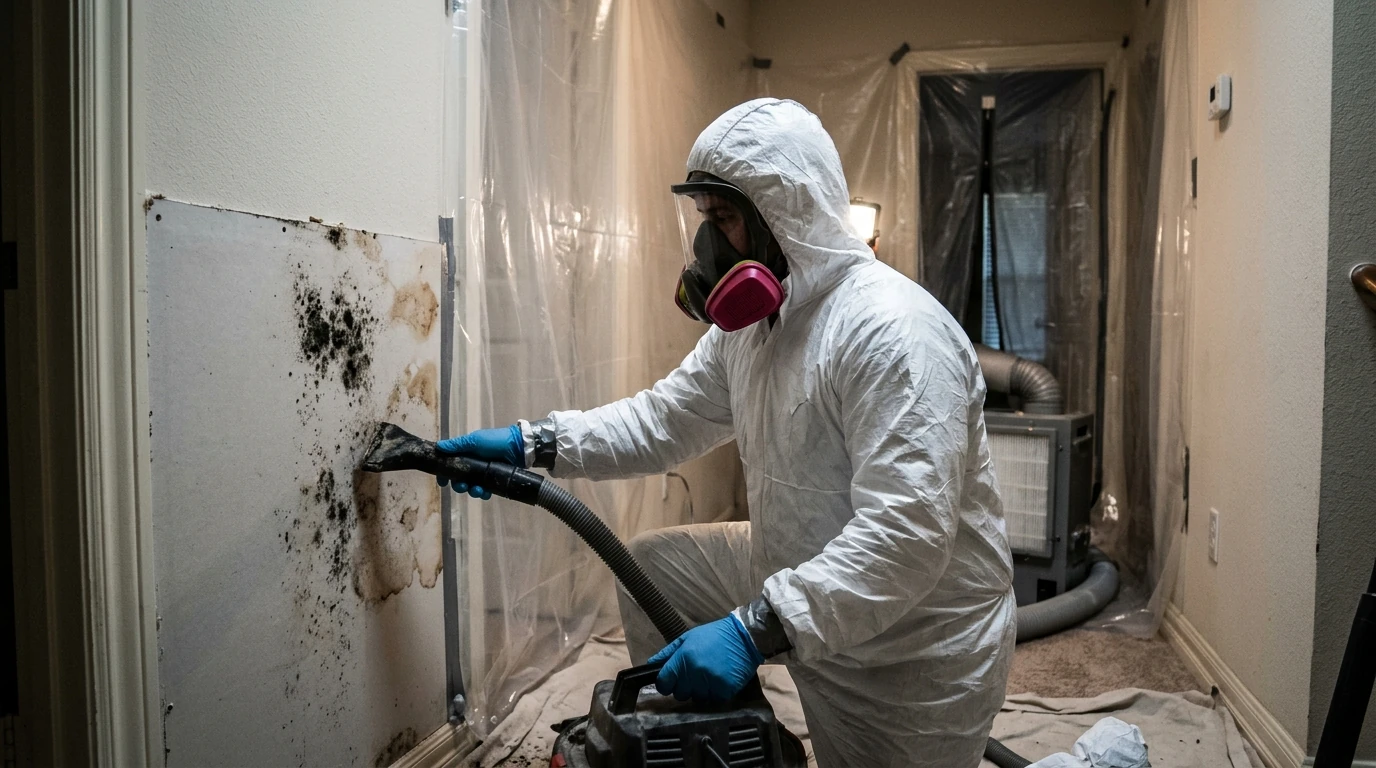
A typical mold remediation job runs through four phases: containment, removal of contaminated materials, HEPA air filtration and cleaning, and a post-remediation clearance test before the area is closed back up.
- Containment. Plastic sheeting seals off the work area and often a negative-air machine pulls air out through a HEPA filter, so mold spores don’t spread to the rest of the house during the work.
- Removal. Drywall, insulation, and other porous materials that can’t be cleaned get cut out and bagged for disposal, following S520 guidelines rather than attempting to clean through them.
- Cleaning and treatment. Remaining structural surfaces get HEPA-vacuumed and treated with an antimicrobial, and the whole space gets a final HEPA air scrub.
- Clearance. A post-remediation verification, sometimes air or surface sampling, confirms the space is clear before drywall or flooring goes back in.
If you’re in the Royse City, Rockwall, or Rowlett area and need someone to walk a property and put a real number on it, Reign Restoration is an IICRC AMRT-certified firm that provides a written scope before any work begins, which is the document you’ll want on hand regardless of who you hire. For a breakdown specific to Royse City job sizes, see our local mold remediation cost guide.
Getting a documented assessment early is the single best way to keep a small job small. Call Reign Restoration at (214) 304-0621 to schedule a mold inspection if you’re seeing staining, smelling a musty odor, or just closed on a home and want a clearance check before moving in.
About Reign Restoration
Reign Restoration is an IICRC Certified Firm (license MRC2276) serving Royse City, Texas and surrounding communities including Rockwall, Rowlett, Wylie, and the greater Dallas area. The team holds IICRC AMRT mold remediation certification along with water and fire restoration credentials, and provides written scopes of work before any remediation project begins.