
TL;DR: Water damage restoration typically runs $1,200 to $4,500 for a single room with clean water, and $5,000 to $10,000 or more for a multi-room loss with contaminated water or structural drying. The final number depends on the water category (how contaminated it is), the class of drying (how much material got wet), and whether reconstruction is needed after mitigation. Most homeowners insurance policies cover sudden water damage, but mitigation and reconstruction are billed, and often covered, as two separate line items.
If you just had a pipe burst in a slab-foundation home in Rockwall or a water heater fail in a Plano garage, you’re probably staring at a quote and wondering if the number is fair. The honest answer is that there is no single price for water damage restoration. A dried-in-24-hours bathroom leak and a four-day structural dry-out after a supply line failure behind drywall are not the same job, and they shouldn’t cost the same. Here’s how the pricing actually breaks down, and what moves it up or down.
How Much Does Water Damage Restoration Cost?
Most water damage restoration jobs cost between $1,200 and $10,000, with the biggest swing factor being the water category and how far it traveled before anyone called for help. A single contained room with clean water, caught within the first day, sits at the low end. A multi-room loss with contaminated water, swollen flooring, and wet wall cavities sits at the high end, before any rebuild work is counted.
| Scenario | Typical Range |
|---|---|
| Single room, clean water (Category 1), caught within 24 hours | $1,200 - $3,500 |
| Multiple rooms, clean water, standard structural drying | $3,000 - $6,000 |
| Category 2 water (gray water, appliance or toilet overflow) | $3,500 - $7,000 |
| Category 3 water (sewage backup, flood water) | $6,000 - $15,000+ |
| Water trapped under hardwood or behind cabinetry | add $1,500 - $4,000 |
| Reconstruction (drywall, flooring, trim, paint) after drying | billed separately, see below |
These are typical industry ranges for North Texas, not a quote. Every loss is different, and a reputable company should give you a written scope before any demolition or drying equipment goes in.
What Determines the Price: Category of Water and Class of Drying
The two biggest cost drivers are the water’s contamination level and how much of the structure absorbed it, both defined by the IICRC S500 standard that restoration companies are trained against. Category 1 is clean water from a supply line. Category 2, also called gray water, carries some contamination, like an overflowing washing machine. Category 3, or black water, includes sewage backups and floodwater and requires more PPE, more disposal, and more aggressive disinfection, which raises labor cost.
Class of drying measures how much material absorbed water, from Class 1 (a small area, low absorption) to Class 4 (water trapped in dense materials like hardwood, plaster, or concrete that needs specialty drying mats and longer equipment runtime). A Class 1 clean-water loss might dry out in two to three days with a couple of air movers and a dehumidifier. A Class 4 loss can run five to seven days of equipment rental, which shows up directly on the invoice as additional drying days.
Slab foundations common across Rockwall, Wylie, and Frisco add a wrinkle: water under slab-on-grade flooring often means pulling baseboards and sometimes flooring to dry the subfloor and wall cavities properly, rather than just running fans in the room. That’s an extra line item most online calculators don’t account for.
Water Damage Restoration Cost Per Square Foot
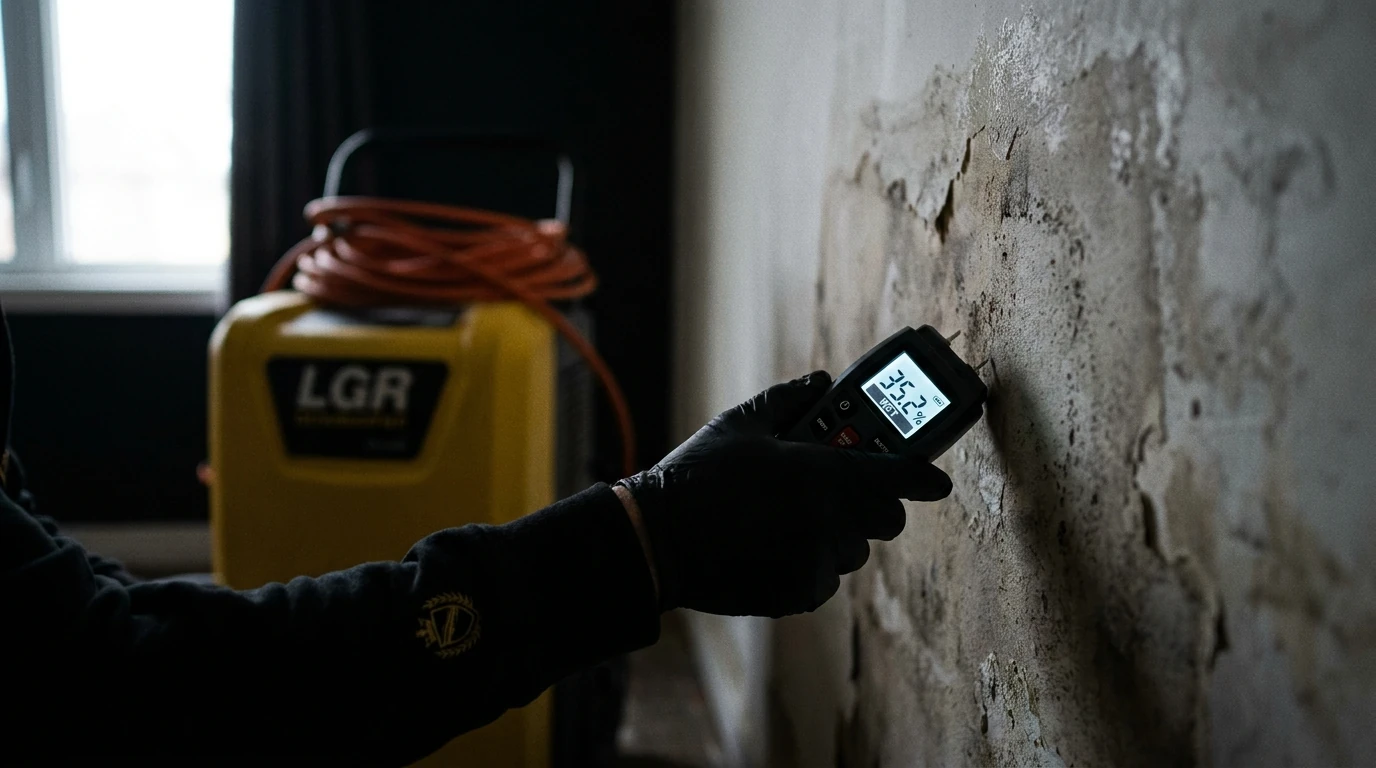
Mitigation-only pricing (extraction, drying, dehumidification) typically runs $3 to $8 per square foot of affected area, not the whole house. A 300-square-foot affected zone with clean water lands near the low end; add contamination, trapped moisture, or antimicrobial treatment and it climbs toward $8 per square foot before any rebuild.
Per-square-foot numbers are useful for a rough sense of scale, but they don’t capture fixed costs like equipment mobilization, moisture mapping, or disposal of contaminated materials, which is why two 300-square-foot losses can still land $2,000 apart.
What Does Water Damage Restoration Include?
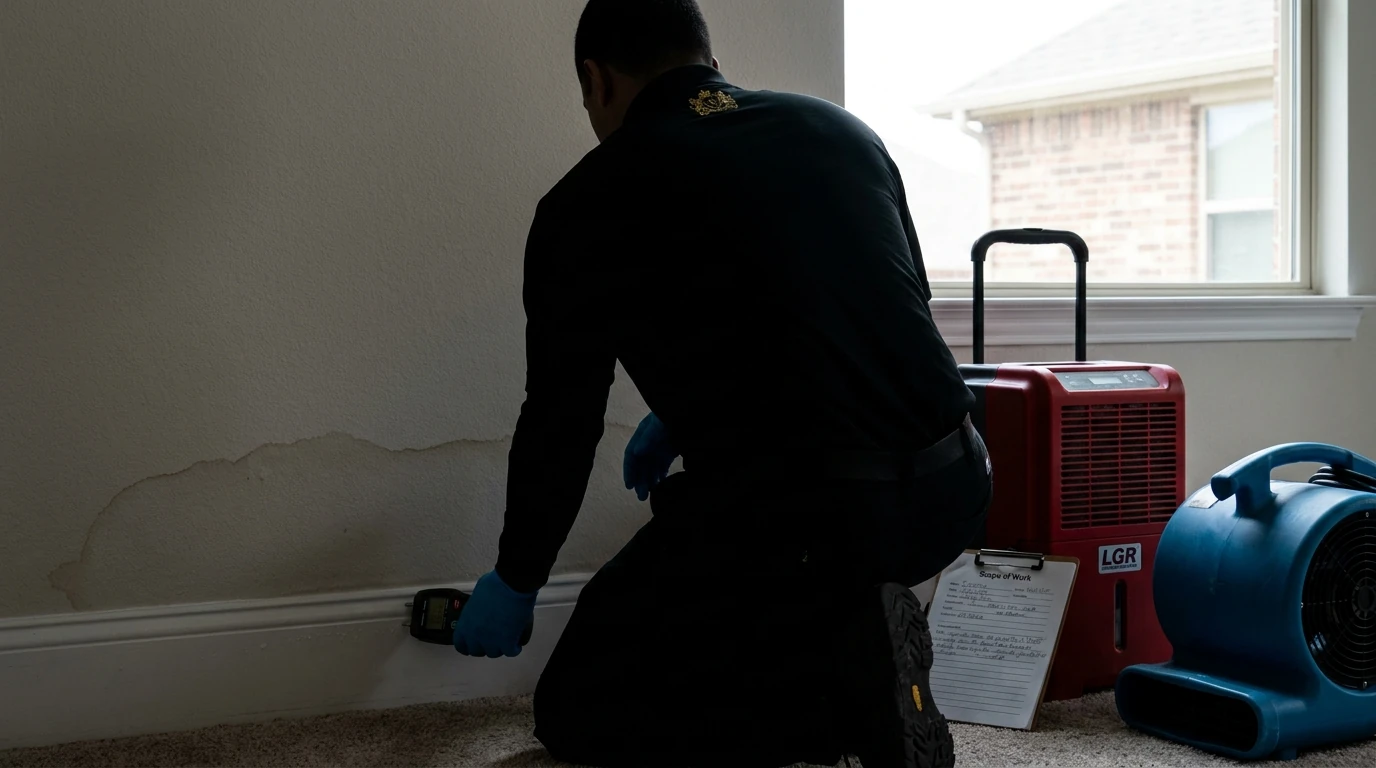
Water damage restoration, specifically the mitigation phase, includes water extraction, moisture mapping with meters, setting air movers and dehumidifiers, antimicrobial application where needed, and daily monitoring until materials reach a dry standard. It does not include rebuilding drywall, flooring, or cabinetry; that’s reconstruction, a separate phase with its own scope and invoice.
Who Pays for Water Damage Restoration?
Homeowners typically pay the deductible, and their insurance carrier covers the remaining mitigation and often reconstruction cost when the damage is sudden and accidental, like a burst pipe or failed appliance. Gradual leaks, long-term seepage, or damage from deferred maintenance are commonly excluded, so the cause of loss matters as much as the cost itself. The Texas Department of Insurance publishes consumer guidance on filing a claim and what adjusters typically look for.
Mitigation vs. Reconstruction: Why They’re Separate Line Items
Mitigation (drying out the structure) and reconstruction (rebuilding what had to come out) are almost always billed as two separate scopes, and most insurance adjusters process them the same way. Mitigation happens first and fast, because the clock on mold growth starts within 24 to 48 hours of a wet building material. Reconstruction, the drywall, flooring, trim, and paint, happens after the structure reads dry on a moisture meter, and it’s priced like any other remodel: materials, labor, and square footage.
This is the part most homeowners get wrong when they see a mitigation estimate and assume it covers putting the house back together. It doesn’t. A $3,000 mitigation invoice for extraction and drying is a completely separate number from the $8,000 it might cost to replace water-damaged hardwood and repaint three rooms. Insurance carriers generally want these as two line items anyway, since they often assign different adjusters or reserves to each phase. Companies that handle general contracting in-house can quote both phases together, which avoids the gap where a drying-only company leaves you to find a separate contractor for the rebuild.
Is There a Water Damage Restoration Cost Calculator Worth Using?
Online calculators can give a rough range, but they can’t see your water category, your class of drying, or whether water got under slab flooring, so they’re a starting point at best. The only number that matters is the one in a written scope after a technician has actually run a moisture meter through the affected rooms.
What Should You Do Next?
The fastest way to get an accurate number is a moisture assessment, not a phone quote, since pricing depends entirely on what the meter reads once someone is standing in the affected rooms. A documented assessment also creates the paper trail an insurance adjuster will ask for, which matters more than the estimate itself if the claim gets questioned later.
If you’re dealing with active water damage anywhere from Royse City to Rockwall, Plano, or McKinney, request a written scope before agreeing to any drying or demolition work. For a deeper look at how these numbers shift by job size across the region, see our North Texas water damage cost breakdown. If the cause of the loss is still unclear, does homeowners insurance cover water damage walks through what’s typically covered before you file.
Getting a moisture assessment on the books is the one step that turns a guess into an actual number, and it’s worth doing before equipment shows up rather than after.
About Reign Restoration
Reign Restoration is an IICRC Certified Firm (WRT, AMRT, FSRT) serving Royse City, TX and the surrounding North Texas region, licensed under MRC2276. Their crews handle water damage restoration, storm damage, fire and smoke restoration, mold remediation, contents restoration, and general contracting across Rockwall, Collin, and Dallas counties.