
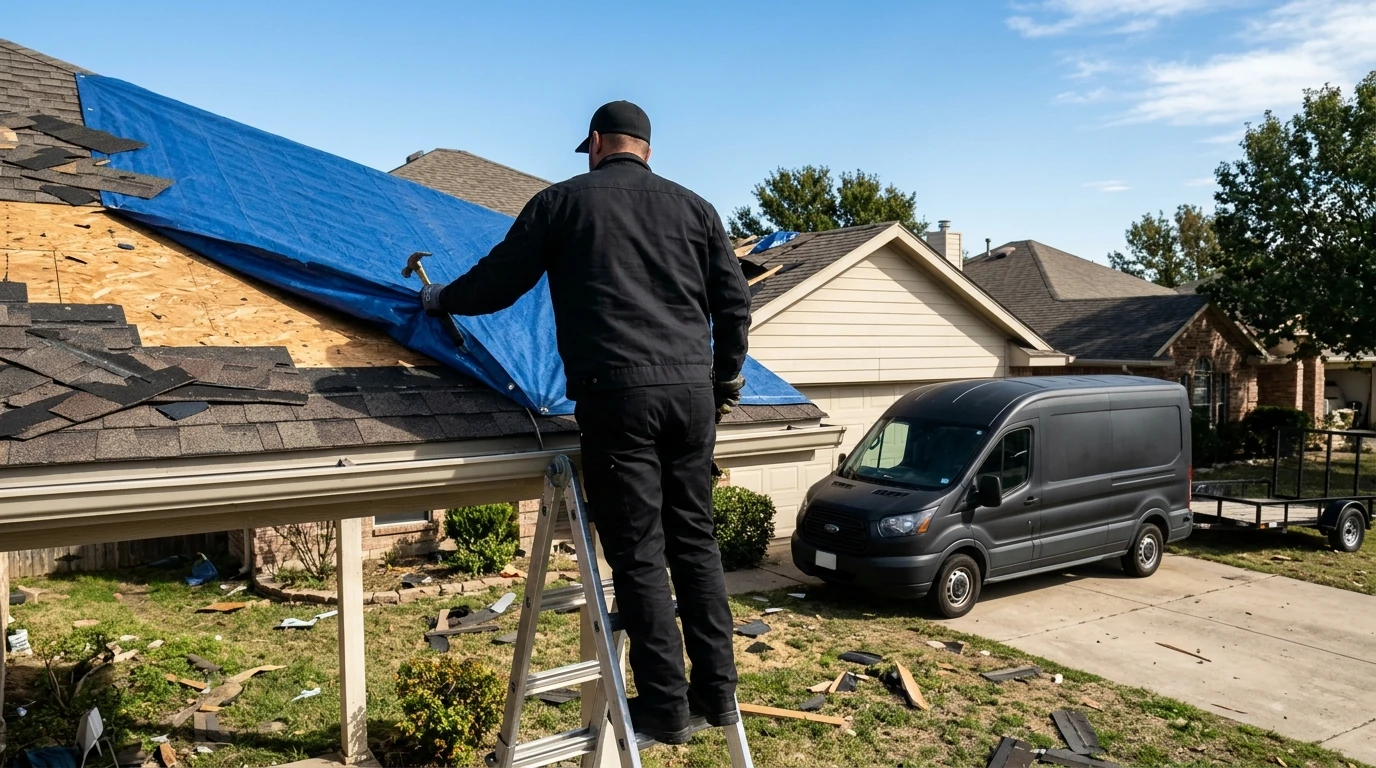
If a tornado tore into your roof, knocked out windows, or drove debris through your siding in Royse City, call Reign Restoration at (214) 304-0621. The company runs 24/7, carries IICRC certifications in water, fire, mold and general restoration (WRT, AMRT, FSRT), and holds a 5.0 Google rating across 26 reviews from homeowners who needed the same emergency board-up and structural triage you need right now.
North Texas sits on the eastern edge of Tornado Alley, and Rockwall and Hunt County see straight-line wind and tornado damage most often in the spring severe weather window. Whatever the season, the first 48 hours after a tornado touches down work the same way: stop the hazard, stop the water, document the damage, then call your insurer. Getting that order wrong is the single most common reason tornado claims get delayed or underpaid.
Who Do You Call First After a Tornado Damages Your House?
Call for life-safety hazards first, a storm damage restoration contractor second, and your insurance company third, never the reverse. That order protects both your family and your claim.
If you smell natural gas, see a downed power line, or the roof structure looks like it could collapse, get everyone out and call 911 or your utility company immediately. Don’t go back inside to grab belongings or take photos until a professional confirms it’s safe. Ready.gov and local emergency management both treat downed lines and gas odors as evacuate-now situations, not wait-and-see ones.
Once the property is safe to approach, a tornado with an open roof or broken windows is a race against the next rain shower, not a next-business-day problem. That’s the call to a storm damage restoration contractor, not a handyman or a roofer alone, because tarping and board-up done wrong can void part of your coverage and let water keep entering the structure. Only after the property is stabilized and documented should you call your insurance company to open the claim. The Texas Department of Insurance specifically advises homeowners to take reasonable steps to prevent further damage before an adjuster ever arrives, and to keep every receipt for temporary repairs.
What Happens When You Call a Storm Damage Contractor After a Tornado?
The first call is a triage conversation: where the damage is, whether water is actively entering, and whether anyone is inside the structure right now. Have your address, a rough description of the damage (roof, windows, a tree through the wall), and your insurance carrier’s name ready if you have it.
On arrival, the crew does three things before anything else: stops active water intrusion with tarping or temporary roof sheathing, boards up broken windows and doors to secure the property, and photographs every area of damage before touching anything. That documentation matters later, since an adjuster relies heavily on what the first responder captured before cleanup started.
From there, the scope widens depending on what the tornado actually did. A roof with missing shingles and exposed decking gets a full inspection and a repair or replacement plan under /services/roofing/. Standing water from a breached roof or blown-out window triggers extraction and drying equipment the same day, tied into the same storm damage restoration scope covered at /services/storm-damage-restoration/. If your situation also involves a tree through the roof, a separate post on fallen trees walks through that call specifically.
How Do You Know If Tornado Damage Is Structural or Just Cosmetic?
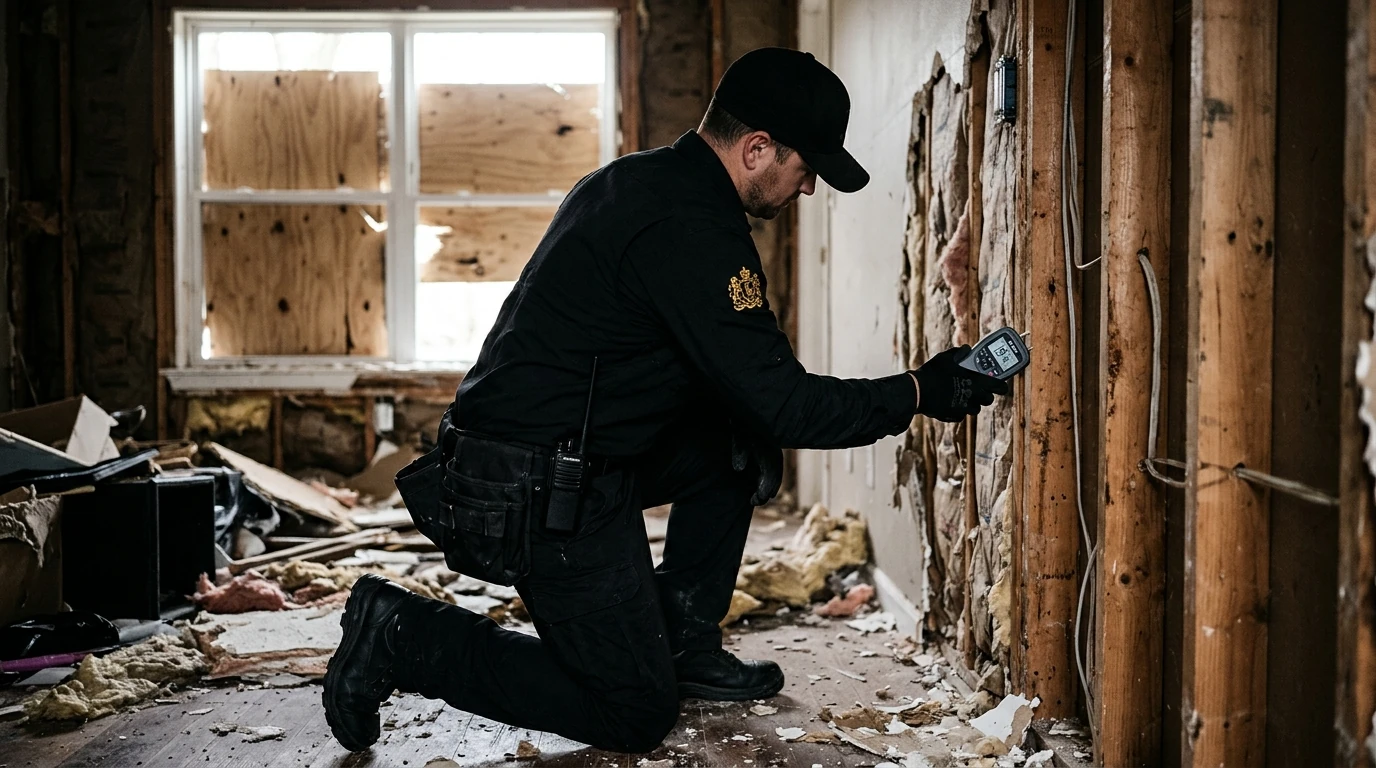
Structural damage shows up as racked door frames that won’t latch, visible roof trusses or rafters, a bowed or leaning exterior wall, or new cracks running through brick or foundation. Cosmetic damage, like torn siding or a few missing shingles, doesn’t threaten the building’s integrity.
The tricky part is that tornado wind loads can rack a frame without an obvious exterior sign. Doors that suddenly stick, new gaps at window trim, or a floor that feels slightly off-level are all worth a professional structural assessment, not a guess. This is where a licensed general contractor gets involved alongside the restoration crew: the /services/general-contracting/ team evaluates load-bearing elements, and if framing, trusses, or exterior walls need to come out and go back in, that scope moves into full /services/reconstruction/ rather than a patch repair.
Don’t sign off on a quick cosmetic fix until someone has actually checked the frame. An insurer’s adjuster is evaluating the same structural questions, and a documented assessment from the contractor doing the mitigation work carries more weight in that conversation than a verbal opinion.
What Happens to Your Belongings After a Tornado Breaches the Roof or Walls?
Contents inside a breached structure get packed out, inventoried, and cleaned or stored off-site while the structural repair happens, rather than left in place to take on more water or dust damage. That keeps furniture, electronics, and personal items out of a construction zone and gives the insurance claim a clean inventory to work from.
The /services/contents-restoration/ process typically starts with photographing items where they sit, then moving salvageable belongings to climate-controlled storage. Items with water or debris exposure get cleaned and tested before they go back in; items that can’t be saved get documented for the claim instead of quietly disposed of.
This step matters more than homeowners expect. A rebuild that takes six to ten weeks is a long time to have furniture sitting in a house with an open roof or missing exterior wall.
If the damage runs from a tarp-and-board emergency into a multi-month rebuild, start with the storm damage team and let them loop in general contracting and reconstruction as the scope is confirmed. Call Reign Restoration at (214) 304-0621 to get a licensed crew assessing the structure and coordinating the insurance documentation from day one.
About Reign Restoration
Reign Restoration is an IICRC Certified Firm based in Royse City, TX, serving Rockwall, Greenville, McKinney, Plano, Garland, Mesquite, Terrell, Wylie and Farmersville. The company holds IICRC certifications in water (WRT), mold (AMRT) and fire and smoke (FSRT) restoration, plus a Texas mold remediation certificate (MRC2276) through the Texas Department of Licensing and Regulation. Its crews handle storm damage restoration, roofing, reconstruction, general contracting, contents restoration, water damage, fire and smoke damage, mold remediation, and odor removal, and the company operates 24/7 with a 5.0 Google rating across 26 reviews.