
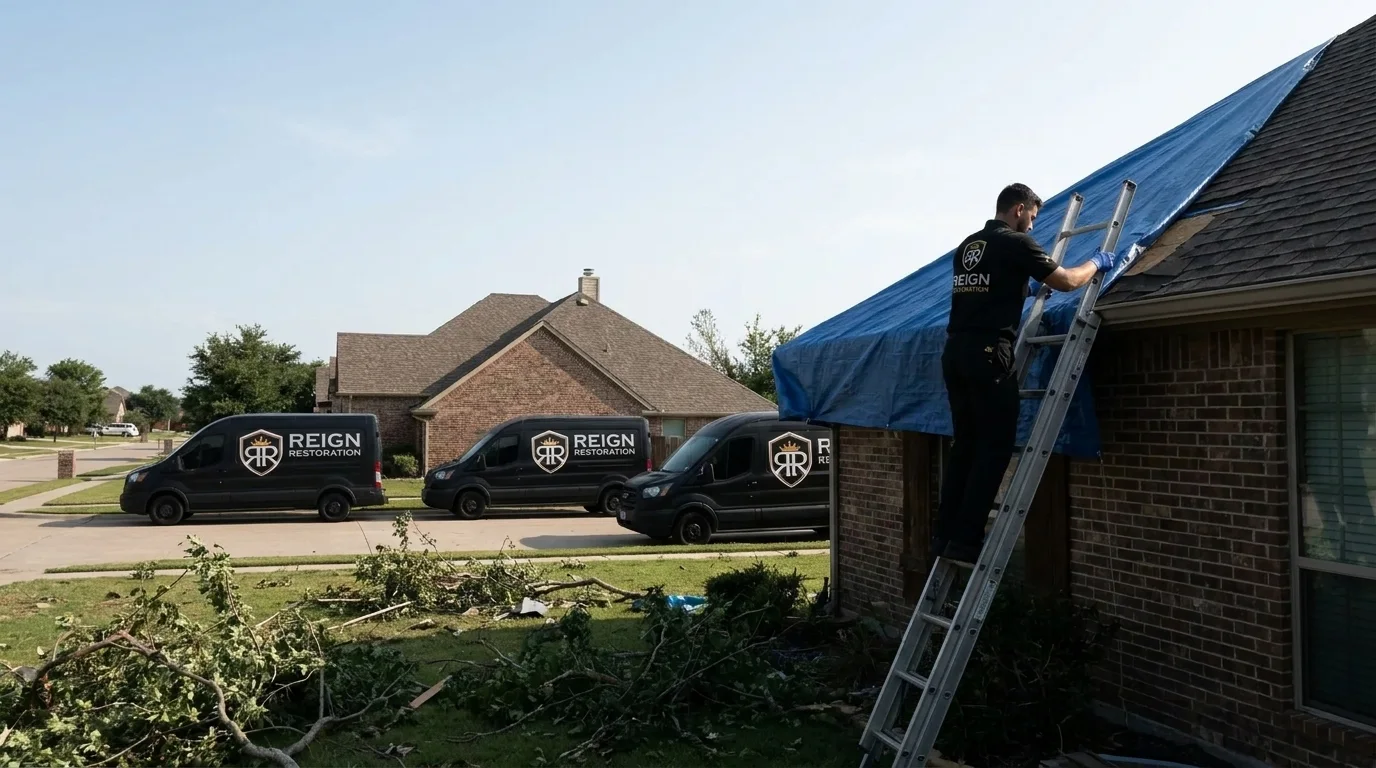
24/7 Emergency Storm Damage Restoration in Dallas
24/7 emergency storm damage restoration in Dallas, TX. IICRC-certified, insurance billing accepted. Call (214) 304-0621.
Our IICRC-certified technicians are dispatched from our Royse City, TX headquarters and are typically on-site in Dallas within 60 minutes of your call.
Storm damage emergency in Dallas? We answer 24/7. Call now and our crew heads out to secure the property and stop further damage.
Dallas storms don’t ease in gradually, a spring supercell can drop baseball-sized hail on Preston Hollow, spin a tornado through Oak Cliff, and flood White Rock Lake’s surrounding streets inside the same hour. When that happens, the damage to your roof, siding, windows, and interior isn’t just cosmetic. Water follows every breach, and in a city where Blackland clay shifts with every wet-dry cycle, even a few inches of standing water in a crawl space or slab seam can set off a chain of structural and mold problems that outlast the storm by months.
Why Dallas Properties See Severe Storm Damage
Dallas sits in one of the most active severe-weather corridors in North America. Hail seasons peak in April and May, and the city averages more hail events per year than almost anywhere in the country, insurance adjusters here call it “hail alley” for a reason. But the physical makeup of Dallas neighborhoods shapes how that damage plays out on the ground.
East Dallas neighborhoods like Lakewood, the M Streets, and Casa Linda are built on flat Blackland clay, expansive soil that swells when saturated and shrinks in drought. Homes here are often 1920s–1940s pier-and-beam construction with original cast-iron drains and wood-framed walls that absorb moisture faster than modern assemblies. A storm that punches through a roof or breaks a window doesn’t just wet the surface; it saturates wall cavities that were never designed to be dried with mechanical equipment.
West of the escarpment, Oak Cliff’s rolling terrain channels runoff differently. Streets in the Bishop Arts District and surrounding blocks can sheet-flood in under 20 minutes during a fast-moving storm, pushing water under doors and into finished basements before residents have time to react. Meanwhile, Lake Highlands’ 1960s slab ranches face a different problem: when hail or wind strips flashing and shingles, water infiltrates the slab perimeter and wicks up through the foundation edge, damage that doesn’t show up on the ceiling until days later.
Our Storm Damage Restoration Process in Dallas
Every storm job starts with a thorough damage assessment before any material is moved or covered. We photograph and document the full scope, roof penetrations, window breaches, interior water intrusion, and any structural compromise, because that documentation is the foundation of your insurance claim. Skipping this step, or letting an unlicensed crew tarp and patch before a proper assessment, is one of the most common reasons Dallas homeowners end up undercompensated.
From there, the process follows a clear sequence:
- Emergency stabilization, tarping exposed roof decking, boarding broken windows and doors, and extracting any standing water before it migrates further into wall assemblies or flooring.
- Moisture mapping, thermal imaging and calibrated moisture meters identify hidden saturation in walls, ceilings, and subfloor cavities that visual inspection misses.
- Structural drying, IICRC-certified drying plans use commercial desiccant and refrigerant dehumidifiers alongside high-velocity air movers, calibrated to the specific material assemblies present (pier-and-beam subfloors dry differently than poured slabs).
- Debris and tree removal coordination, when a downed tree has breached the structure, we coordinate safe removal and shore up the opening before weather can compound the damage.
- Reconstruction, once the structure is dry and stable, we move into repairs: roofing, framing, drywall, flooring, and finish work, all under one contractor relationship.
Reign Restoration holds IICRC certification as a firm, with technicians certified in water damage restoration and applied microbial remediation, relevant because storm intrusion and mold colonization often overlap on a compressed timeline in Dallas’s humid summers.
Reaching Dallas from Royse City
Reign Restoration is based in Royse City, roughly 30 miles east of downtown Dallas on US-80. We serve the full Dallas metro around the clock, and our crews run I-30 westbound into East Dallas neighborhoods like Lake Highlands (75238) and Casa Linda, or cut south on US-175 toward Oak Cliff and the Bishop Arts District. For central and north Dallas, Uptown, Preston Hollow, the M Streets, the I-635 and US-75 corridors keep us moving even when surface streets are blocked by storm debris.
Because we operate 24/7, a call at 2 a.m. after a tornado warning clears gets the same response as a call at noon. Dallas storms don’t follow business hours, and neither do we.
Dallas Insurance & HOA Coordination
Dallas homeowners file more hail and wind claims per capita than most U.S. metros, which means local adjusters are experienced, and thorough. We work directly with all major carriers active in the DFW market, providing line-item Xactimate-format documentation that matches the format adjusters expect. We also flag supplemental damage that’s easy to miss in an initial inspection: hail-damaged HVAC equipment on rooftops, gutters with hidden fascia rot, and window seals broken by pressure changes during a tornado passage.
If your property falls under an HOA, common in Uptown high-rises and newer Lake Highlands subdivisions, we’re familiar with the approval workflows most Dallas HOAs require before exterior repairs begin. We can provide scope-of-work documentation in the format most HOA management companies request, which prevents repair delays that can stretch moisture exposure unnecessarily.
Local Note
One thing that catches homeowners off guard in Lakewood and the M Streets: the original cast-iron drain lines under those 1920s–1940s pier-and-beam homes are often partially corroded and can back up when storm runoff overwhelms the city sewer system during heavy rain. When that happens, the water entering the crawl space isn’t just rainwater, it carries sewage contamination that changes the remediation category entirely under IICRC S500 protocols. If your East Dallas home floods during a storm and you notice any odor beyond musty dampness, tell us when you call. It affects how we suit up, what equipment we use, and how we handle disposal, and it matters for your family’s health, not just the paperwork.
If your Dallas property took a hit in the last storm, call Reign Restoration at (214) 304-0621. We’ll assess the full scope of damage, get emergency stabilization in place, and walk you through every step from that first tarp to the final coat of paint, so you’re not managing five different contractors while your house sits open to the next weather system.
Serving Dallas from our Royse City headquarters — ★ 5.0 · 27 Google reviews
“I can’t say enough good things about Reign Restoration. Every project they have worked on has been completed with outstanding quality. They are professional, reliable, and take pride in their work. Communication is always clear, and they go the extra mile to make sure everything is done right the…” — Marlin, August 2025Read our reviews on Google →
Storm Damage Restoration in Dallas: Service Coverage
Frequently Asked Questions
How fast can you arrive for storm damage restoration in Dallas?
Are older pier-and-beam homes in Lakewood and the M Streets harder to dry out after storm water intrusion?
How quickly can Reign Restoration reach Oak Cliff or the Bishop Arts District after a storm?
Does Dallas's Blackland clay soil affect storm damage restoration work on slab foundations?
What's the risk of mold after a storm in Dallas's summer humidity?
How does the insurance documentation process work for hail damage in Dallas?
Storm Damage Restoration response in Dallas
Most Dallas calls see a technician on-site within 60 minutes from our Royse City headquarters.