
For drywall repair after water damage in Royse City, call Reign Restoration at (214) 304-0621. Reign is an IICRC Certified Firm holding the WRT (water) and AMRT (mold) credentials, carries a 5.0-star rating across 26 Google reviews, and answers 24/7, so the same crew that measures how wet the wall is can also be the one that cuts it open and rebuilds it.
That matters because a soaked wall in a Royse City home, whether it’s a 1990s slab-on-grade ranch or a newer two-story build, is actually two jobs stacked on top of each other: a drying job and a carpentry job. Call the wrong business first, or call them in the wrong order, and you end up paying to patch a wall that goes moldy again six weeks later.
Who should I call first when drywall gets wet?
Call a water damage restoration company before you call anyone who repairs or paints drywall. A restoration crew stops further damage, pulls moisture readings, and decides what can be dried versus what has to be cut out, all of which has to happen before a rebuild starts.
If the water source is still active (a supply line, a water heater, a slow roof leak during rain), the very first call is whatever stops the water: a plumber for a plumbing failure, or the main shutoff if you can reach it yourself. Once the water is off, the next call is the restoration side of the job, not the repair side.
Homeowners in Royse City often default to calling a handyman or painter because the wall looks like a cosmetic problem: a stain, a bubble, a soft spot. It isn’t, until it’s been measured and dried.
Why doesn’t a painter or handyman come first?
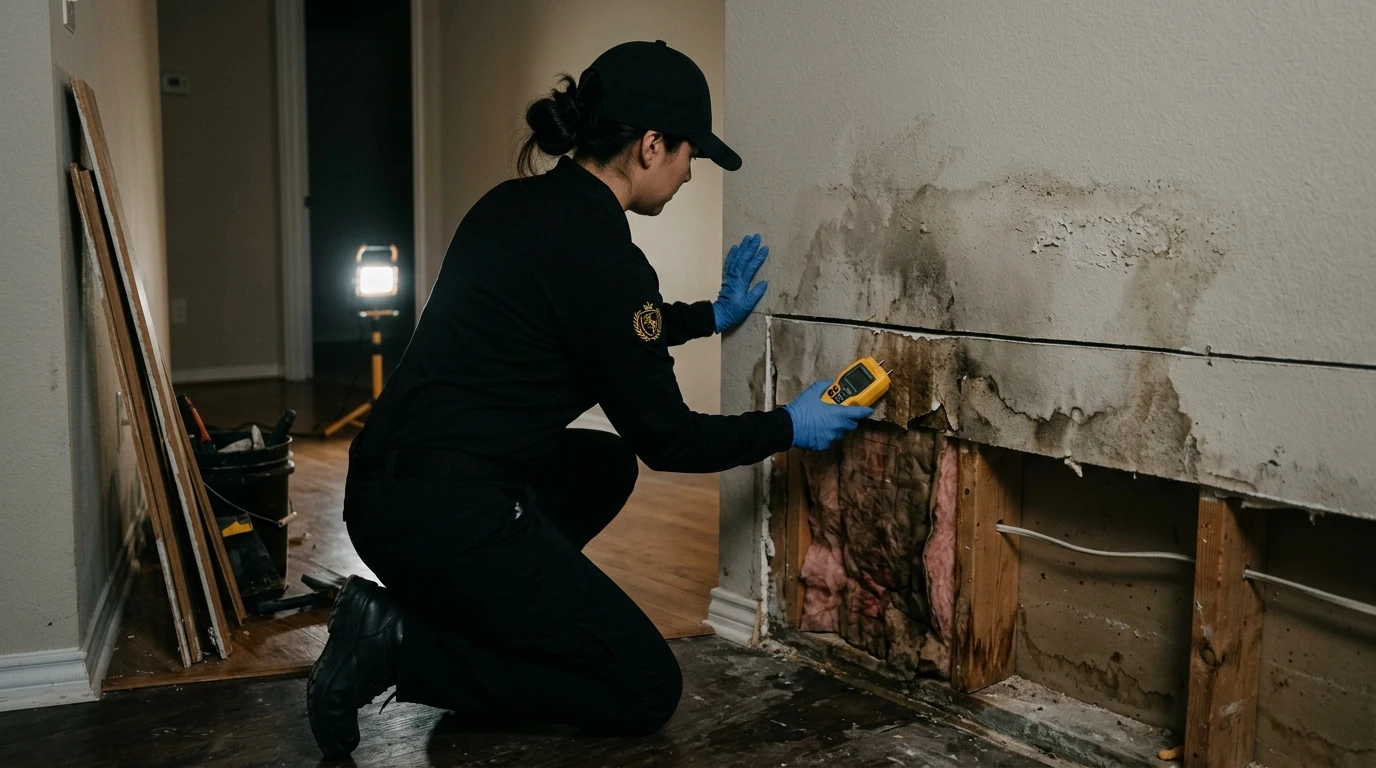
A painter patches what’s in front of them; they don’t measure what’s still wet behind the drywall, and patching over damp material traps moisture that can turn into mold within 24 to 48 hours, per the EPA’s guidance on mold and moisture.
Drywall is porous. Paint and texture are not. A patch skims the surface, but the paper backing, the insulation behind it, and the base plate below it can stay wet for days if nobody checks them with a moisture meter. Drying follows the ANSI/IICRC S500 water damage standard, which calls for documented moisture readings, not a guess based on how the wall looks or feels.
This is the handoff gap: a painter who patches first, then a restoration company who has to tear that same patch back out two weeks later when mold shows up, costs more than doing it in the right order once.
Can wet drywall be saved, or does it need to be cut out?
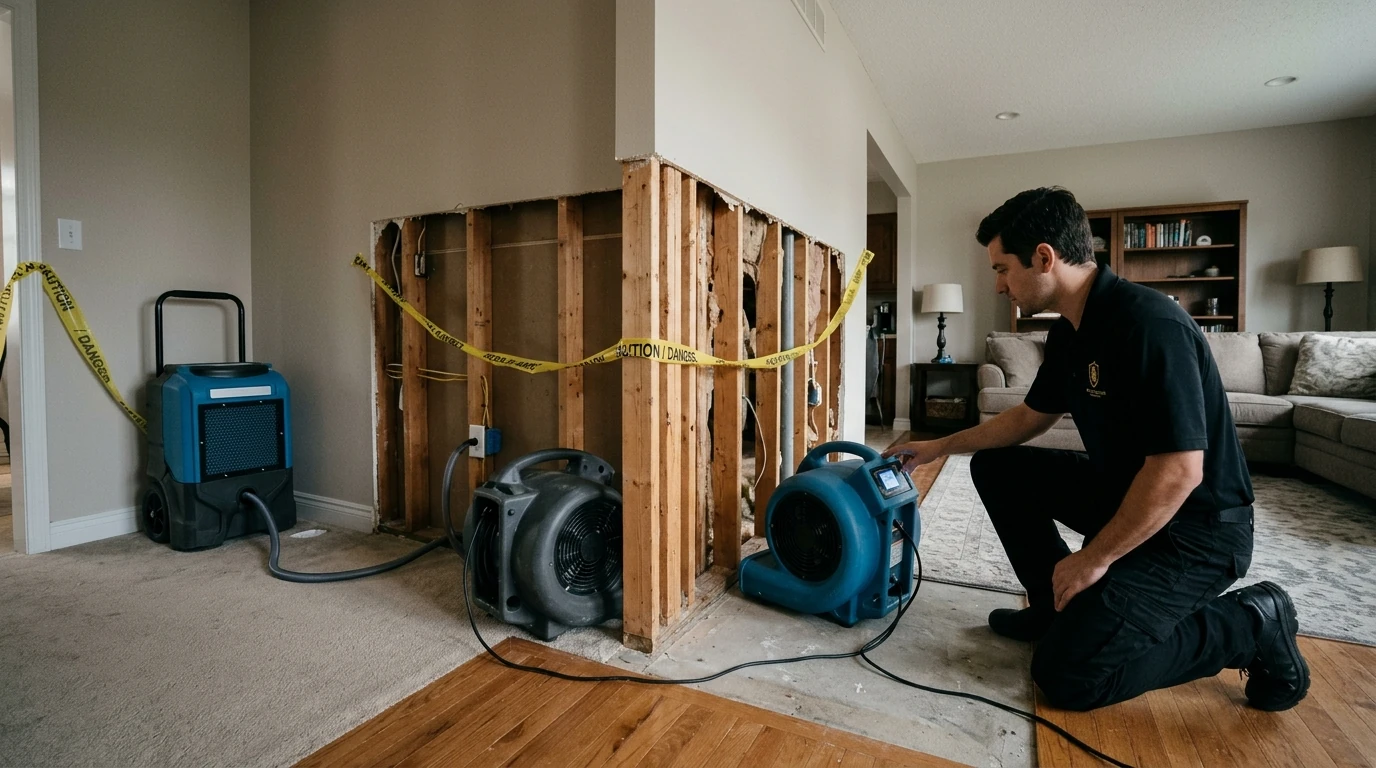
Wet drywall can sometimes be dried and saved if the water was clean, the wall was dry within 24 to 48 hours, and the drywall hasn’t swollen or lost its structural integrity. Beyond that window, or with contaminated water, it comes out.
A few things decide it:
- Water category. Clean water from a supply line (Category 1) gives drywall the best odds of drying in place. Water from a sewer backup or storm flooding (Category 3, also called black water) means the drywall and any wet insulation are removed, not dried, because the material can’t be made sanitary.
- How long it sat. Drywall that’s been wet more than 48 hours is treated as a mold risk even if it looks fine, per EPA guidance.
- Physical condition. Sagging, crumbling, or a paper layer that’s separated from the gypsum core means the panel has already lost its strength and has to be replaced regardless of category.
- How high the water climbed. Only the wet section typically comes out. A restoration tech marks the waterline and cuts a clean, level line above it rather than removing a whole wall unnecessarily.
If the trim at the bottom of the wall is swollen or the paint has lifted, that’s often the first visible sign something’s wrong behind it, the same read our baseboard water damage guide walks through in more detail.
How do you know if drywall has water damage, and could there be mold behind it?
Look for staining, a chalky or soft texture when you press it, bubbling paint, a musty smell, or tape lines at the seams that have started to separate. Any one of those means the drywall has taken on moisture, even without a visible wet spot.
Mold doesn’t need a flood to get started. A slow leak behind a wall can feed mold growth for weeks before anyone notices a stain, and the smell often shows up before the visible damage does. If a wall has been damp for an extended period, or a previous leak was patched without drying the cavity first, it’s worth having it checked before a rebuild closes the wall back up. Our mold remediation team handles that testing and treatment separately from the drywall carpentry, and Reign’s Texas mold remediation contractor license (MRC2276) covers that side of the work.
A ceiling tells a similar story to a wall, just upside down; if you’re also watching a stain spread across a ceiling, our ceiling water damage guide covers when that surface has to come down.
Does insurance pay for drywall replacement after water damage?
Most standard homeowners policies cover drywall replacement when the water loss was sudden and accidental, like a burst supply line or a failed appliance hose, but not when it came from a long-term leak or poor maintenance. Check your policy; this varies by insurer.
A gradual leak behind a wall, the kind that caused the staining in the first place, is the scenario insurers scrutinize most closely, since policies generally exclude damage from ongoing seepage rather than a sudden event. Documentation protects the claim either way: dated photos, moisture readings, and a written scope of the drywall that’s being removed versus dried. The Insurance Information Institute has a plain-language overview of what standard policies typically include. Our water damage insurance claim guide walks through filing one in Texas.
What happens when you call Reign Restoration?
A tech asks what happened, when, and whether the water source is stopped, then schedules a visit to take moisture readings on the wall before anything gets cut open. Have the approximate time the leak started and any photos of the stain ready; it speeds up the assessment.
On site, the crew uses a moisture meter to map how far the water traveled inside the wall cavity, not just where it’s visible. That reading decides the plan: dry in place with air movers and a dehumidifier, or cut the wet section out to the stud bay. Once the cavity reads dry, or the damaged section is removed, our reconstruction crew frames, hangs, tapes, and textures the wall to match, so the same company that measured the damage is the one that closes it back up. You can see what that full process looks like start to finish in our water damage rebuild case study.
If you’re staring at a stained or bubbling wall in Royse City right now, the fastest path to getting it fixed right the first time is a moisture assessment before anyone picks up a drywall saw. Request one through our contact page or call (214) 304-0621.
About Reign Restoration
Reign Restoration is an IICRC Certified Firm based in Royse City, TX, holding the WRT (water), AMRT (mold), and FSRT (fire and smoke) credentials and a Texas mold remediation contractor license (MRC2276). The company handles water damage restoration, mold remediation, fire and smoke restoration, and reconstruction across Royse City, Rockwall, Rowlett, Wylie, and the surrounding North Texas area, and answers calls 24/7 at (214) 304-0621.
Video Transcript
A soaked drywall isn’t just an ugly stain on the wall, it’s really two separate jobs: drying everything out, then rebuilding it correctly. In Royse City, calling the wrong company first often means paying twice when hidden mold shows up weeks later. Always call a certified water damage restoration company first, before any painter or handyman ever touches that wet drywall. If the leak is still active, shut off the water first, then bring in restoration pros to measure and dry everything. A painter only patches what’s visible, but trapped moisture behind drywall can grow mold within just 24 to 48 hours. Paint and texture look dry on the surface, but the paper backing and insulation behind it can stay soaked for days. Clean water damage often means drywall can be dried and saved; contaminated water means it has to be cut out completely. Watch for staining, bubbling paint, musty odors, or soft spots, each one signals hidden water damage behind the wall. Insurance usually covers sudden, accidental water damage, not long-term leaks, so photos and moisture readings help protect your claim. Reign Restoration handles both drying and rebuilding under one roof, start to finish. Call (214) 304-0621 for a free estimate.