
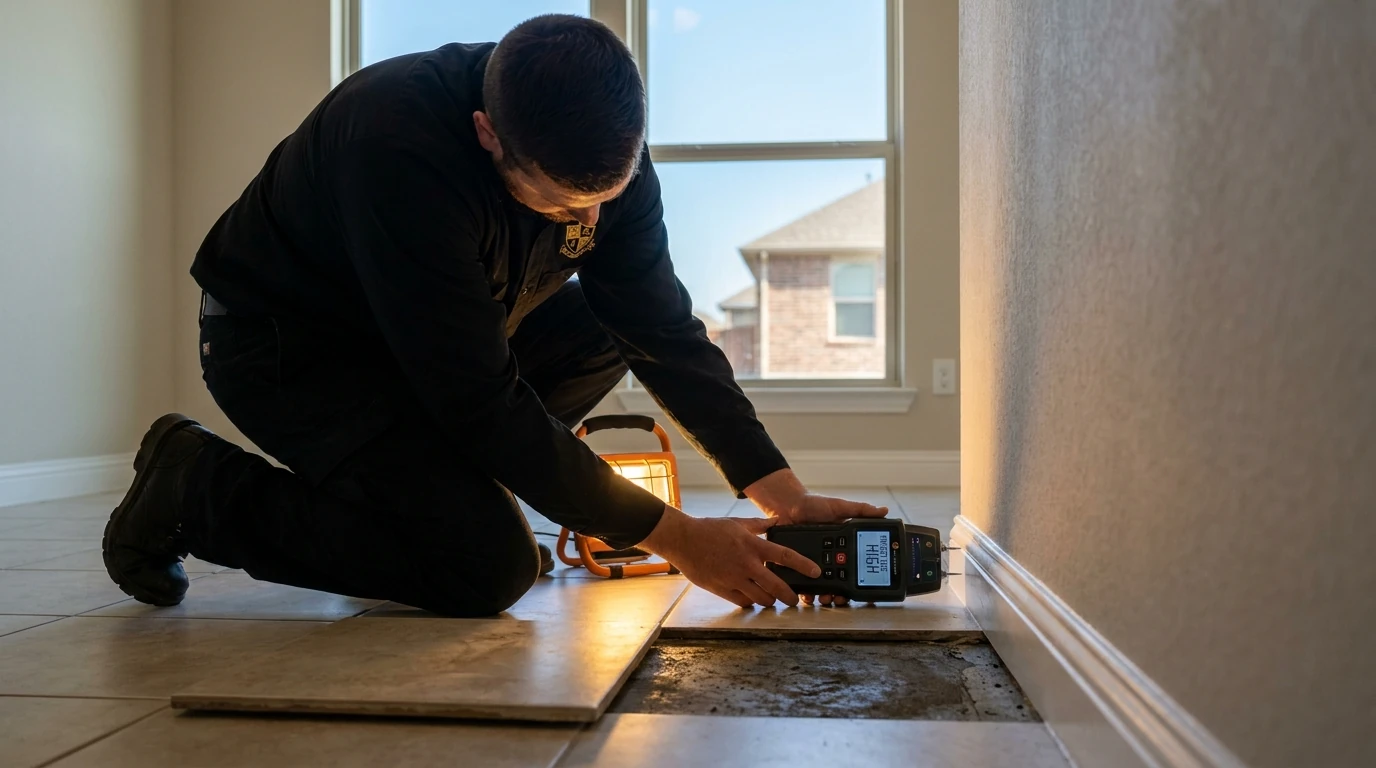
TL;DR: A slab leak needs two different companies, in order. A licensed plumber locates the leaking line with electronic detection equipment and repairs or reroutes the pipe. A water damage restoration company dries out the slab and flooring, removes what can’t be saved, and rebuilds. Shut off your home’s main water valve first if you can, then start with leak detection. Restoration and plumbing are separate trades, and no single company legally does both.
If you’ve found a warm spot on your tile, a patch of flooring that stays damp no matter how many times you mop it, or a water bill that jumped $80-$150 over last month with no obvious reason, you likely have a slab leak. For a slab leak in Royse City, call Reign Restoration at (214) 304-0621 to start the leak detection and water damage side of the job. Royse City sits on expansive Blackland Prairie clay, the same soil that runs under most of Rockwall, Fate and the rest of the DFW DMA, and that soil shifts enough with wet and dry cycles to stress copper and PEX supply lines running under a slab foundation. Slab leaks are a genuinely common water damage source here, not a rare fluke.
Is it really a slab leak, or something else?
The combination of a rising water bill, a warm or damp spot on the floor, and the sound of running water when every fixture in the house is off points to a slab leak more reliably than any single sign alone.
Other clues: a hot spot under tile or laminate (usually means the hot water line is the one leaking), a musty smell near a baseboard with no visible source, or cracking in the slab or nearby drywall that wasn’t there before. A warm spot alone could also be a heating duct, so combine it with the water bill before assuming the worst.
If the leak is active and visible, like water pooling around a fixture or coming up through a crack, shut off the home’s main water valve immediately. That stops the loss from growing while you make calls.
Who do you call first: plumber, leak detection, or restoration company?
Call a leak detection service or licensed plumber first to pinpoint the exact location of the leak before anyone cuts into the slab; call the restoration side once water has already damaged flooring, baseboards, or drywall.
Electronic leak detection uses acoustic listening equipment and sometimes infrared imaging to locate the leak within a foot or two, without guessing and jackhammering the whole slab. That detection work and the actual pipe repair, whether it’s a spot repair, a full reroute overhead through the attic, or a reline, has to be done by a licensed plumber. Reign Restoration does not hold a plumbing license and does not repair the pipe itself, so be upfront about that when you call: the company handles locating moisture, drying the structure, and rebuilding what the leak damaged, and a plumber handles the line.
Most homeowners end up coordinating both trades at once. A practical order looks like this:
- Shut off the main water valve if the leak is active.
- Call a restoration company for moisture assessment and leak detection coordination, especially if flooring or walls are already wet.
- Get a licensed plumber scheduled to locate and repair the actual line.
- Once the leak is stopped, the restoration side dries the slab and framing, removes wet flooring, baseboards, or drywall that can’t be saved, and rebuilds.
It’s worth reading Who to Call for Water Damage Restoration in Royse City, TX for the broader version of this decision tree if other parts of the house were affected too, not just the slab area.
What does a slab leak do to the flooring and framing above it?
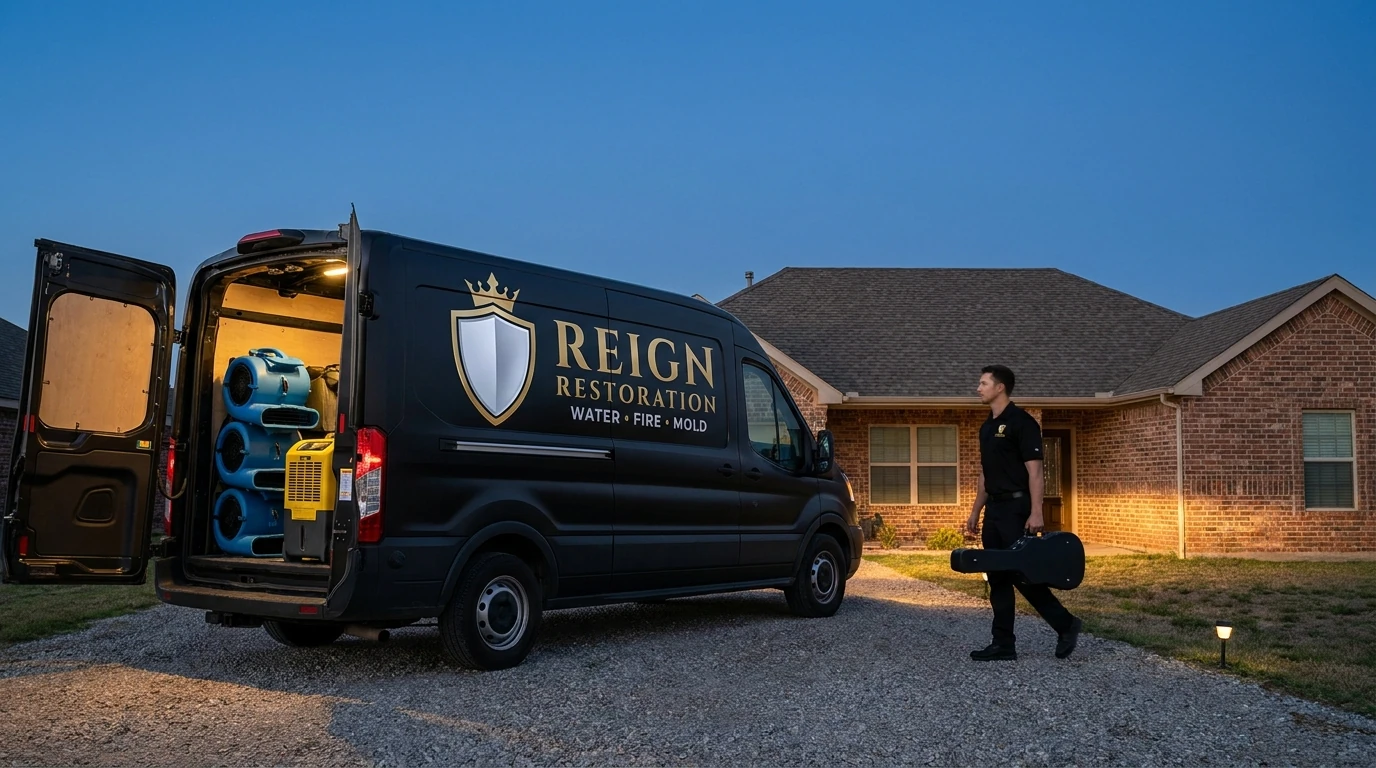
A slab leak traps moisture under flooring and inside wall cavities for days or weeks before anyone notices, which means tile, laminate, hardwood, and the baseboards and drywall nearest the floor are usually wet well beyond the spot you can see.
Hardwood and laminate over a slab leak almost always need to come up once the subfloor underneath has absorbed water; tile sometimes can be dried in place depending on the setting bed. Drywall and baseboards wick water upward from the slab, so a 2-foot flood cut (removing drywall up to roughly two feet above the visible waterline) is common even when the leak itself only affected a small area. Left untreated, trapped moisture under a slab can support mold growth within 24 to 48 hours (EPA).
If you’re not sure whether your flooring is salvageable, the comparison in Hardwood Floor Water Damage walks through what typically gets dried versus removed.
Will homeowners insurance cover a slab leak in Texas?
Most Texas homeowners policies cover the sudden, accidental water damage caused by a slab leak, like the cost to dry and rebuild the flooring and walls, but they typically exclude the cost of locating and repairing the pipe itself unless your policy has a specific water backup or service line endorsement.
The distinction insurers draw is between the damage (usually covered if sudden) and the plumbing repair (usually not, treated as a maintenance item). A slow, long-term seepage leak that caused gradual damage over months is far more likely to be denied than a leak that clearly started suddenly. Document the date you discovered it, the water bill spike, and photos before any demolition starts. For the Texas-specific version of this, see the Texas Department of Insurance’s guidance on water damage and mold coverage and the fuller walkthrough in Water Damage Insurance Claim: How to File One in Texas Without Sinking It.
Drying and documentation generally follow the ANSI/IICRC S500 standard for water damage restoration, which is also the standard most adjusters expect a restoration invoice to reference.
What happens when you call about a slab leak?
The first call establishes whether water is actively flowing, locates moisture extent with a meter or thermal camera, and schedules a technician, usually same day in the Royse City area given Reign Restoration’s 24/7 availability.
Have the address, a description of what you’ve noticed (the warm spot, the water bill, when it started), and whether the main valve is shut off ready when you call. On arrival, a technician maps the wet area with a moisture meter, coordinates timing with whichever plumber is locating and repairing the line, and sets drying equipment once the leak is stopped. Tear-out of damaged flooring and baseboards and the rebuild afterward follow once the source is fixed, since drying around an active leak doesn’t hold.
If you’re staring at a warm spot on the floor right now, the fastest path forward is scheduling a moisture assessment so someone can confirm whether it’s a slab leak before you start tearing anything up yourself.
About Reign Restoration
Reign Restoration is an IICRC Certified Firm (license MRC2276) based in Royse City, TX, serving Rockwall, Fate, Rowlett, Wylie, and the surrounding DFW communities 24/7. The team holds IICRC WRT, AMRT, and FSRT credentials and handles water damage restoration, water leak detection, emergency water removal, mold remediation, fire and smoke damage restoration, storm damage restoration, and reconstruction. They coordinate directly with licensed plumbers on slab leak jobs rather than performing plumbing repairs themselves.